
Musical.ly
The lip-sync app that became TikTok
Musical.ly was the lip-sync video app that defined teenage social media from 2014, reaching 100 million monthly users. ByteDance bought it for a reported $1 billion in 2017 and merged it into TikTok on 2 August 2018, transferring every account and video into the app that would conquer the world.
Timeline [edit]
- 2014
-
August 2014
Launch
Musical.ly launches
Fifteen-second lip-sync videos after an education-app pivot.
- 2015
-
July 2015
Peak
Number one on the US App Store
A teenage creator economy forms around "musers".
- 2017
-
9 November 2017
Acquisition
ByteDance buys Musical.ly
Reported up to $1 billion for the Western audience.
- 2018
-
2 August 2018
Shutdown
Merged into TikTok
Accounts, followers and videos transfer overnight.
- 2019
-
27 February 2019
Legal
Record FTC children's privacy fine
$5.7 million over data collected from under-13s on Musical.ly.
How it looked [edit]
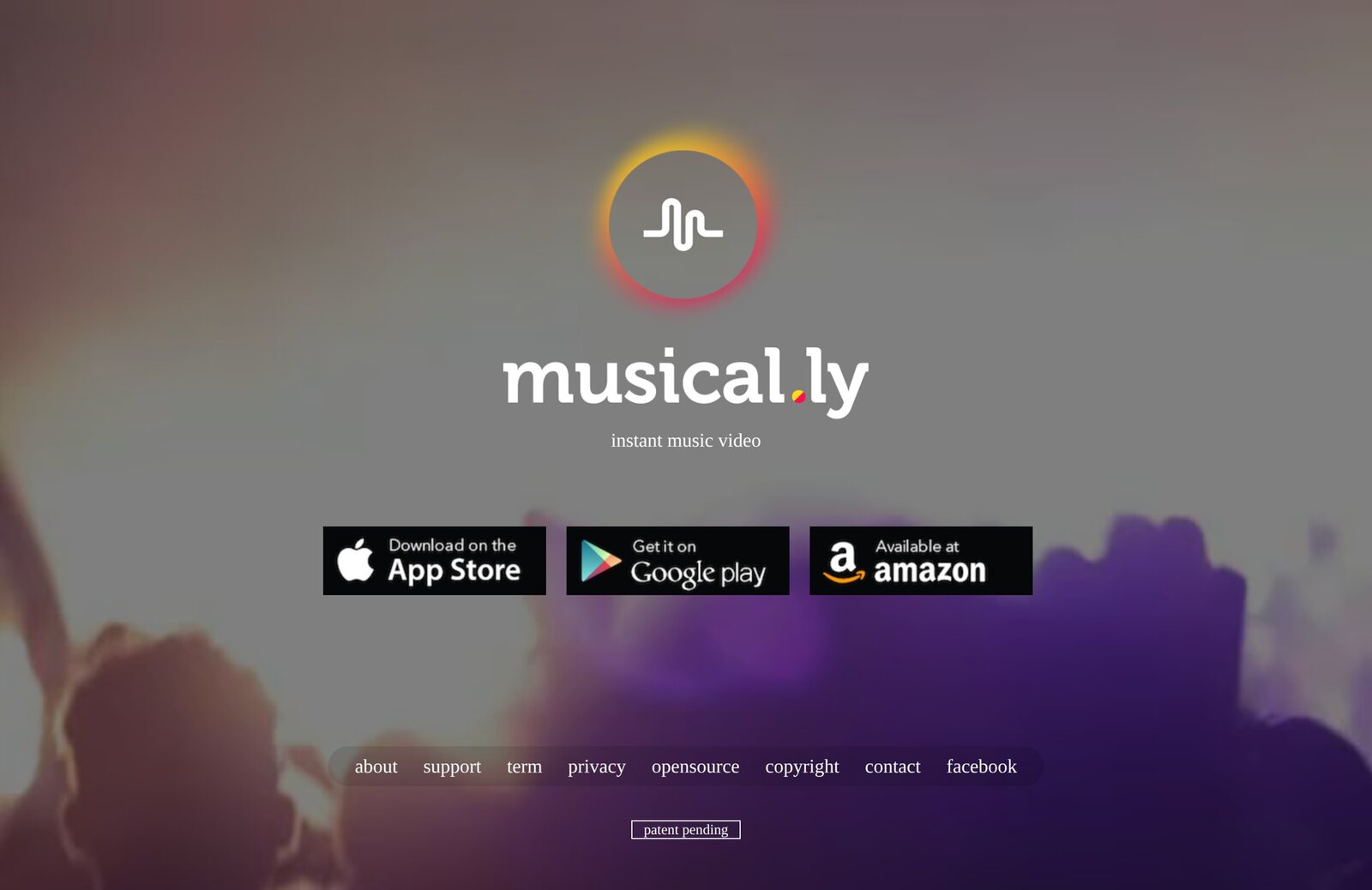
The site through time
Browse musical.ly as it was, via the Internet Archive's Wayback Machine:
Ownership [edit]
Key figures [edit]
| Metric | Value | As of | Confidence |
|---|---|---|---|
| Monthly active users ▲ | 100 million | 9 November 2017 | Reported Claimed at the ByteDance acquisition |
Confirmed official figures · Reported media, cites a source · Estimated analyst or our estimate
Why it shut down [edit]
Official line: ByteDance, which bought Musical.ly for a reported up to $1 billion in 2017, merged it into TikTok on 2 August 2018; accounts, followers and videos transferred automatically.
Our analysis: Musical.ly is the rare shutdown that was a promotion: its users, product ideas and even its co-founder became TikTok, which went on to reshape global social media. The brand died so the app could scale worldwide under one name.
History [edit]
Fifteen seconds of lip-sync
Alex Zhu and Luyu Yang built Musical.ly in 2014 after their first idea, a short-form education app, failed. The pivot was simple: let teenagers film themselves lip-syncing to fifteen seconds of a song, with speed controls, filters and easy music licensing baked in. It hit number one on the US App Store in mid-2015, and "musers" built an entire creator economy: duets, hashtag challenges, and a first generation of teenage internet celebrities.
By 2017 it claimed 100 million monthly active users, overwhelmingly young and overwhelmingly Western, which is exactly what a Chinese giant needed.
Renamed into history
ByteDance, which ran the near-identical Douyin in China and its international clone TikTok, acquired Musical.ly in November 2017 in a deal reported at up to $1 billion. On 1 August 2018 the company threw a party to announce the merge; on 2 August 2018 Musical.ly users woke up inside TikTok, with their followers, videos and usernames intact. Zhu became a senior TikTok executive.
The merger handed TikTok tens of millions of Western users overnight and is now considered one of the most consequential acquisitions in social media history. It also had a long tail: in 2019 the FTC fined Musical.ly's owner $5.7 million over children's privacy violations, then a record, and the app's American user base became a central fact in the years of political fights over TikTok that followed.
Similar projects
 Vine
Six seconds, looped forever
2013–2017
Vine
Six seconds, looped forever
2013–2017
 Justin.tv
One man's life stream that became Twitch
2007–2014
Justin.tv
One man's life stream that became Twitch
2007–2014
 Periscope
Live from anywhere, until the money ran out
2015–2021
Periscope
Live from anywhere, until the money ran out
2015–2021
 Blip
Where web series lived before YouTube channels, bought by Maker Studios and deleted a year later
2005–2015
Blip
Where web series lived before YouTube channels, bought by Maker Studios and deleted a year later
2005–2015
 Veoh
The video site that beat Universal in court, went bankrupt two months later, and then took fourteen more years to actually die
2005–2024
Veoh
The video site that beat Universal in court, went bankrupt two months later, and then took fourteen more years to actually die
2005–2024
 Mixer
The $100 million assault on Twitch
2016–2020
Mixer
The $100 million assault on Twitch
2016–2020
Sources [edit]
- Musical.ly Owner ByteDance Merges App With TikTok The Hollywood Reporter 2 August 2018 [archived]
- Musical.ly Merges With New Video App TikTok, Creating Single Global Platform Billboard 2 August 2018 [archived]
Last verified: 11 August 2026. Spotted an error? Suggest an edit (corrections with sources are reviewed and applied).