
Omegle
Talk to strangers, for fourteen years, until it could not be made safe
Omegle paired you with a stranger and let you talk. No account, no profile, no history. An eighteen year old built it in 2009 in Vermont and it became a fixture of internet culture for fourteen years. It also became a place where children were preyed on, and in November 2023 its founder shut it down rather than keep fighting that.
Timeline [edit]
- 2009
-
25 March 2009
Launch
Omegle launches
An eighteen year old in Vermont puts up a page that says "Talk to strangers!".
-
April 2009
Peak
150,000 page views a day
Less than a month after launch.
- 2010
-
March 2010
Feature
Video chat
The feature that makes Omegle a fixture of internet culture.
- 2021
-
19 November 2021
Legal
The A.M. lawsuit is filed
$22 million, arguing the harm came from how the site was built.
- 2022
-
2022
Feature
The minimum age is raised to eighteen
It changes little in practice.
- 2023
-
8 November 2023
Shutdown
Omegle closes
K-Brooks posts a personal letter and switches it off the same day.
How it looked [edit]


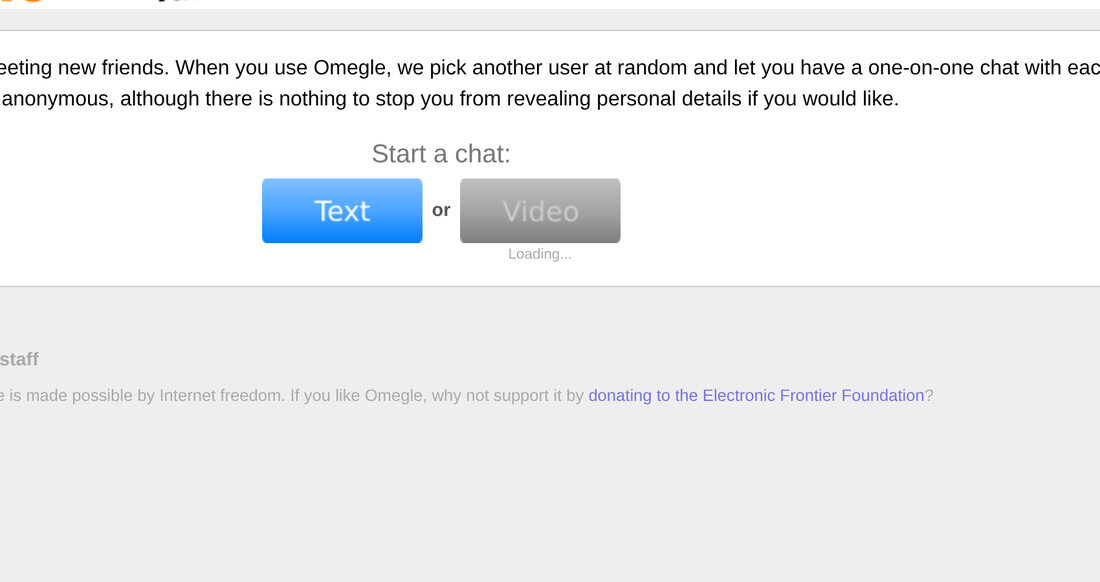
The site through time
Read the old front page here, in one piece, from our own capture: omegle.com, 2 June 2011 →
Browse omegle.com as it was, via the Internet Archive's Wayback Machine:
Ownership [edit]
Why it shut down [edit]
Official line: Leif K-Brooks closed the site on 8 November 2023 with a long personal statement, while facing a $22 million lawsuit from a woman who was matched with a predator on Omegle at the age of eleven. He wrote that the fight was no longer sustainable, financially or psychologically.
Our analysis: Omegle was built on a single idea, that you should be able to talk to a stranger with no account and no trace, and that idea is what made it impossible to police. The founder spent years adding moderation to a product whose whole premise resisted it, and eventually said so.
History [edit]
Talk to strangers
Leif K-Brooks was eighteen, living in Brattleboro, Vermont, when he launched Omegle in March 2009. The product was one line of text: "Talk to strangers!". You clicked, and you were in a one to one text chat with a random person somewhere in the world. No registration, no username, no record of any of it.
Within a month it was serving around 150,000 page views a day. Video chat arrived in March 2010, and from then on Omegle was a permanent part of internet culture: a staple of YouTube reaction videos, a lockdown pastime, a punchline, and for a lot of teenagers the first place they ever spoke to a stranger online.
The other half
The design that made it appealing also made it dangerous. There were no accounts to ban, no history to review, and for years no meaningful age check. In 2022 the rules were changed to eighteen and over, which changed little.
In November 2021 a lawsuit was filed by a plaintiff identified as A.M., who had been matched on Omegle with a man in his thirties when she was eleven, and was coerced by him for three years. The suit sought $22 million and, crucially, argued that the harm came from the way Omegle was built rather than from something a user posted, which is the argument that gets around the liability shield American platforms usually rely on. A federal judge let that theory proceed.
The statement
On 8 November 2023 K-Brooks shut Omegle down and posted a long, unusually personal letter in its place. He wrote about being a survivor of child sexual abuse himself, about the years spent building moderation for a service designed to be anonymous, about the attacks and the legal pressure, and concluded that operating Omegle was no longer sustainable, "financially nor psychologically".
He also made an argument worth recording: that if you make it impossible to run this kind of service, what disappears is not the danger but the open, unowned corner of the internet where anyone could meet anyone.
The domain today
omegle.com resolves and shows the Omegle name with a note that it is launching soon. Nothing has launched, and it is not clear who is behind it. The service described here ended in November 2023.
Similar projects
 ICQ
The messenger that gave you a number
1996–2024
ICQ
The messenger that gave you a number
1996–2024
 Skype
The app that made calling the world free
2003–2025
Skype
The app that made calling the world free
2003–2025
 Meebo
Every messenger, in one browser tab
2005–2012
Meebo
Every messenger, in one browser tab
2005–2012
 MSN Messenger
The sound of nudges after school
1999–2014
MSN Messenger
The sound of nudges after school
1999–2014
 AIM
Away messages and slammed doors
1997–2017
AIM
Away messages and slammed doors
1997–2017
 HipChat
The team chat that was there before Slack, bought by Atlassian, renamed Stride, and then sold to Slack to be switched off
2010–2019
HipChat
The team chat that was there before Slack, bought by Atlassian, renamed Stride, and then sold to Slack to be switched off
2010–2019
Sources [edit]
- Omegle shut down: Video chat website closed after abuse claims BBC News 9 November 2023 [archived]
- Omegle Was Forced to Shut Down by a Lawsuit From a Sexual Abuse Survivor Wired 9 November 2023 [archived]
Last verified: 13 August 2026. Spotted an error? Suggest an edit (corrections with sources are reviewed and applied).