Wunderlist
The to-do app Microsoft bought to bury
Wunderlist was the beloved cross-platform to-do app from Berlin's 6Wunderkinder, launched in 2010 and used by millions. Microsoft bought the company in 2015, rebuilt the product as Microsoft To Do, and shut Wunderlist down on 6 May 2020 despite its founder publicly offering to buy it back.
Timeline [edit]
- 2010
-
9 November 2010
Launch
Wunderlist launches
A free, cross-platform to-do app that syncs everywhere.
- 2013
-
2013
Peak
Millions of users and app-of-the-year lists
One of Berlin's biggest startup successes.
- 2015
-
2 June 2015
Acquisition
Microsoft acquires 6Wunderkinder
A reported $100-200 million for the team and the product.
- 2017
-
19 April 2017
Decline
Microsoft To Do launches
The in-house replacement built by the Wunderlist team.
-
November 2017
Incident
Founder offers to buy it back
Christian Reber publicly tries to rescue the app; Microsoft declines.
- 2019
-
9 December 2019
Shutdown announced
Shutdown date announced
Users pointed to Microsoft To Do with an importer.
- 2020
-
6 May 2020
Shutdown
Wunderlist shuts down
Sync stops; the app becomes a read-only memory.
How it looked [edit]

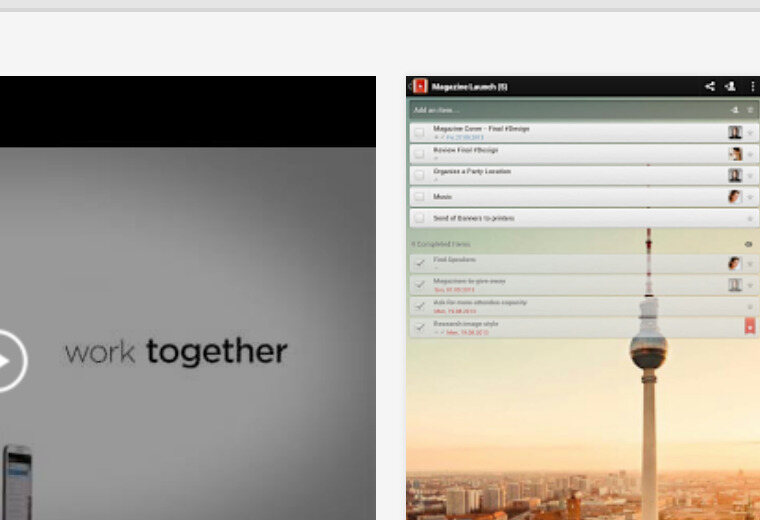
The site through time
Read the old front page here, in one piece, from our own capture: wunderlist.com, 17 May 2013 →
Browse wunderlist.com as it was, via the Internet Archive's Wayback Machine:
Ownership [edit]
Key figures [edit]
| Metric | Value | As of | Confidence |
|---|---|---|---|
| Registered accounts ▲ | 13 million | 2 June 2015 | Reported Cited around the Microsoft acquisition |
Confirmed official figures · Reported media, cites a source · Estimated analyst or our estimate
Why it shut down [edit]
Official line: Microsoft, which acquired maker 6Wunderkinder in 2015, shut Wunderlist on 6 May 2020 after rebuilding its features into Microsoft To Do.
Our analysis: Microsoft bought Wunderlist for its team and its taste, spent years rebuilding it as To Do, and killed the original once the replacement was adequate. Founder Christian Reber publicly offered to buy it back; Microsoft declined, which is the whole story of acquihire economics in one exchange.
History [edit]
Berlin's beautiful list
Wunderlist launched on 9 November 2010 from 6Wunderkinder, a Berlin startup that had failed with its first product. The app was free, synced flawlessly across every platform anyone used, looked far better than its competitors, and made sharing a list with a partner or team trivial. It became one of the most recommended productivity apps in the world and one of Germany's most visible startup successes, with more than 13 million users by the time of its sale.
Microsoft acquired 6Wunderkinder in June 2015 for a reported $100 to $200 million, then did what large companies do with beloved small products: it started building its own version, Microsoft To Do, staffed by the Wunderlist team, launched in 2017.
The buyback offer Microsoft turned down
Wunderlist stopped taking new signups and drifted while To Do slowly absorbed its features. In 2017 founder Christian Reber publicly offered to buy Wunderlist back rather than see it shut down, and repeated the offer as the end approached; Microsoft never took him up on it. Microsoft announced the closure on 9 December 2019 and shut the service on 6 May 2020, providing an importer into To Do. Reber went on to build Superlist, the app people who never forgave the shutdown were waiting for.
Similar projects
 Skype Qik
The live phone-video pioneer Skype paid $150 million for, shut down, relaunched as a messaging app, and shut down again
2007–2016
Skype Qik
The live phone-video pioneer Skype paid $150 million for, shut down, relaunched as a messaging app, and shut down again
2007–2016
 Foursquare City Guide
The check-in app that made mayors and badges, split into two, then closed to focus on the half it had spun off
2009–2024
Foursquare City Guide
The check-in app that made mayors and badges, split into two, then closed to focus on the half it had spun off
2009–2024
 Yo
An app that said one word, raised a million dollars, and became the whole 2014 app economy in miniature
2014–2016
Yo
An app that said one word, raised a million dollars, and became the whole 2014 app economy in miniature
2014–2016
 Google Goggles
Point your phone at a landmark, a book or a wine label and Google told you what it was, eight years before Lens replaced it
2009–2018
Google Goggles
Point your phone at a landmark, a book or a wine label and Google told you what it was, eight years before Lens replaced it
2009–2018
 Gowalla
The prettier check-in app from Austin that lost the SXSW war to Foursquare, was bought by Facebook for its team and switched off three months later
2009–2012
Gowalla
The prettier check-in app from Austin that lost the SXSW war to Foursquare, was bought by Facebook for its team and switched off three months later
2009–2012
 Astrid
The to-do app with the friendly squid, four million users, bought by Yahoo and closed 96 days later
2008–2013
Astrid
The to-do app with the friendly squid, four million users, bought by Yahoo and closed 96 days later
2008–2013
Sources [edit]
- Microsoft will shut down Wunderlist on May 6, 2020 The Next Web 9 December 2019 [archived]
- Wunderlist officially shuts down on May 6, 2020 Windows Central 9 December 2019 [archived]
Last verified: 11 August 2026. Spotted an error? Suggest an edit (corrections with sources are reviewed and applied).