
Atom
Killed by an editor built on the framework it invented
Atom was GitHub's "hackable text editor", written in web technologies so that anyone could rewrite it in JavaScript and CSS. To ship it, GitHub had to invent a way to run a web app as a desktop program, and called it Atom Shell. That became Electron, which now runs Visual Studio Code, Slack, Discord and Teams. Atom itself was switched off in December 2022.
Timeline [edit]
- 2014
-
26 February 2014
Launch
Atom is announced
GitHub releases an editor written in HTML, CSS and JavaScript.
-
6 May 2014
Feature
Atom is open sourced
Along with Atom Shell, the desktop wrapper built to run it.
- 2015
-
April 2015
Rebrand
Atom Shell becomes Electron
Released separately, it goes on to run Slack, Discord, Teams and VS Code.
-
25 June 2015
Version
Atom 1.0
- 2018
-
26 October 2018
Acquisition
Microsoft buys GitHub
One company now owns Atom and Visual Studio Code.
- 2022
-
8 June 2022
Shutdown announced
GitHub announces the sunset
Priority goes to Codespaces and Visual Studio Code.
-
15 December 2022
Shutdown
End of life
The repositories are archived. A fork called Pulsar continues.
How it looked [edit]
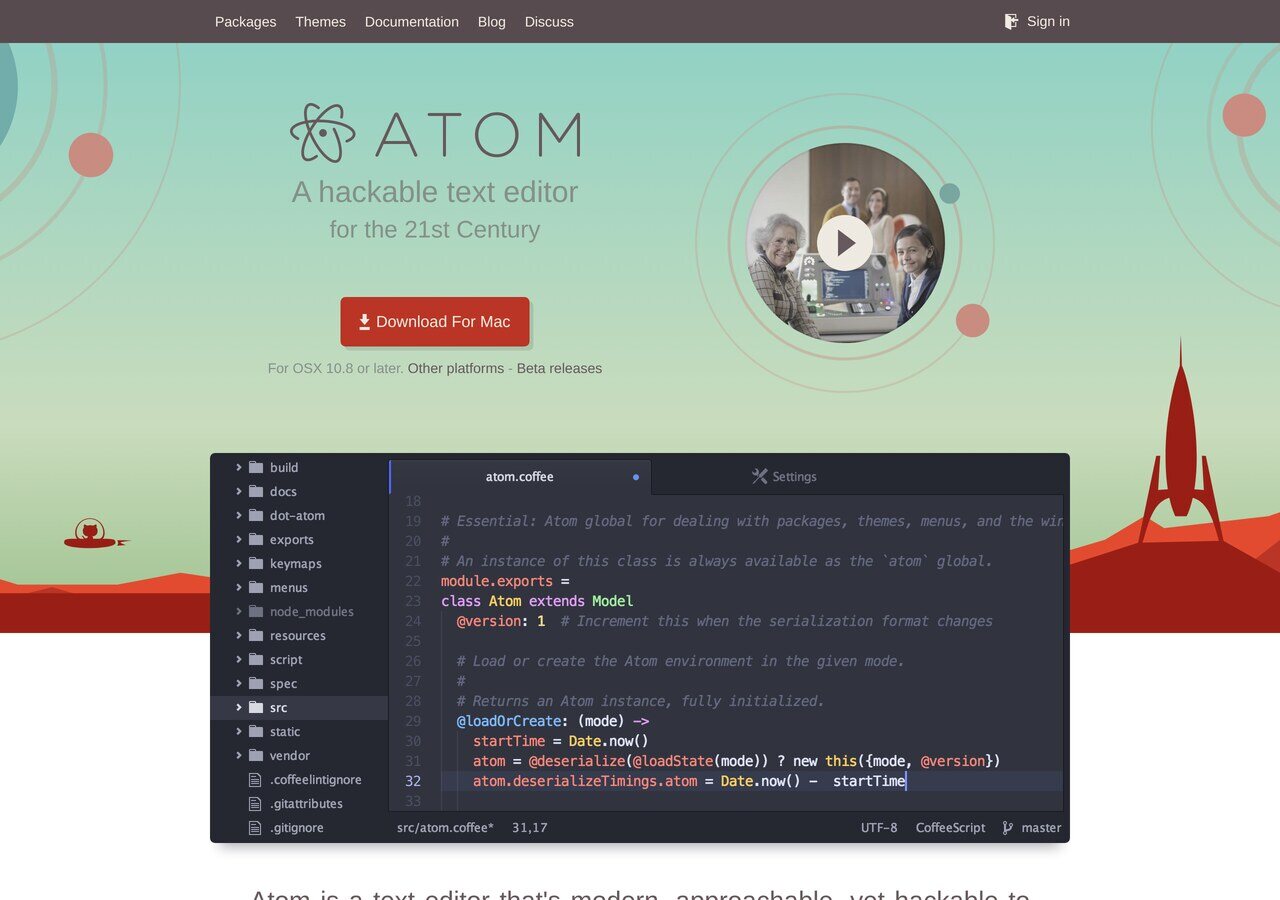
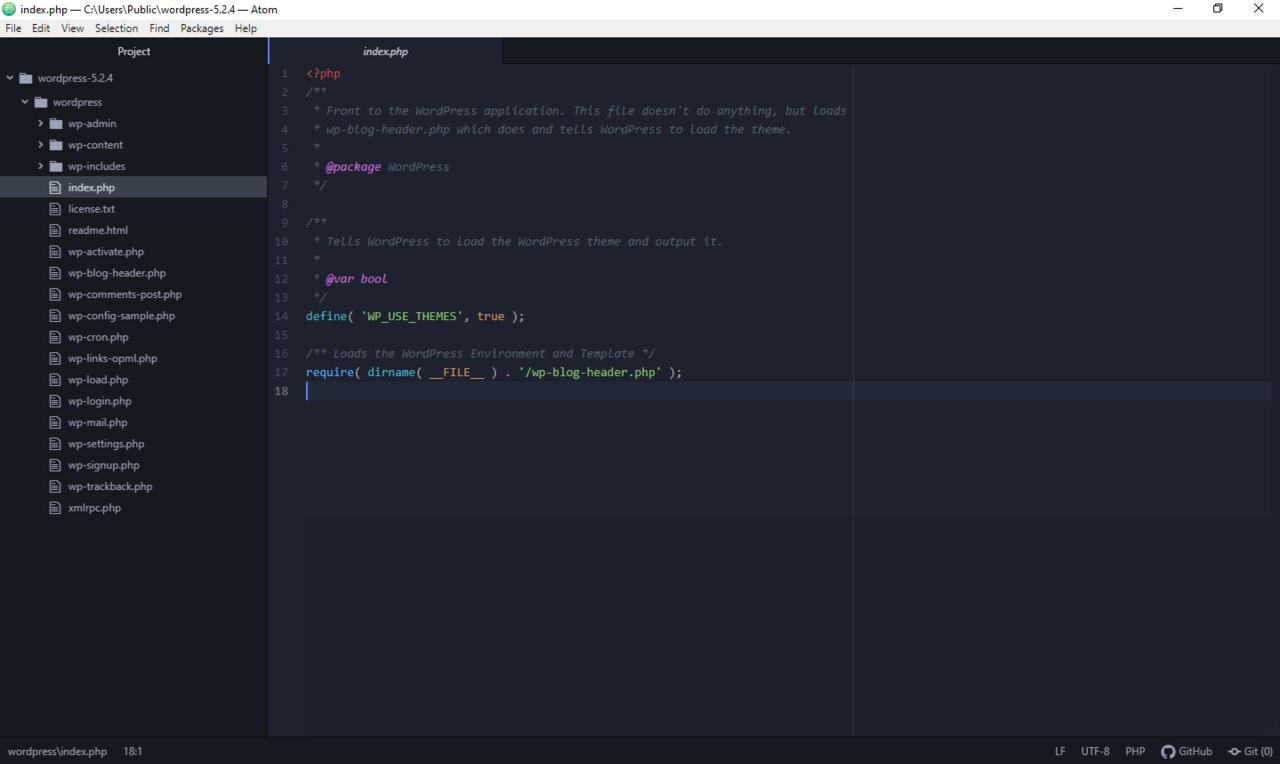
The site through time
Browse atom.io as it was, via the Internet Archive's Wayback Machine:
Ownership [edit]
Why it shut down [edit]
Official line: GitHub announced on 8 June 2022 that Atom would reach end of life on 15 December 2022, saying it needed to prioritise technologies enabling the future of software development, specifically GitHub Codespaces and Visual Studio Code.
Our analysis: Atom lost to Visual Studio Code, which is built on Electron, which was built for Atom. Microsoft bought GitHub in 2018 and then owned both editors, and there was never much doubt which of the two a company would keep.
History [edit]
Hackable to the core
GitHub released Atom in February 2014, invitation only at first, open source that May, and 1.0 in June 2015. The slogan was "a hackable text editor for the 21st century", and it meant it: the editor was HTML, CSS and JavaScript all the way down, so changing how it behaved required no build step and no C++, just the same skills you already had if you made websites.
It arrived at the right moment. Sublime Text was fast but closed and had a single author. Atom was open, backed by a company, and had a package ecosystem from day one. For two or three years it was what a large part of the industry used, and Facebook built its own IDE, Nuclide, on top of it.
The framework that ate its parent
To run a web application as a desktop program, GitHub had to build the shell itself. It was called Atom Shell, and in 2015 it was renamed Electron and released separately.
Electron turned out to be far more important than the editor it was made for. Slack, Discord, Microsoft Teams, Figma's desktop app, WhatsApp on the desktop, and, decisively, Visual Studio Code are all Electron applications. Microsoft shipped VS Code in 2015 using the framework GitHub had written for its competitor, and made it faster, better funded and better integrated.
Sunset
Microsoft acquired GitHub in 2018. For four years both editors continued, with Atom receiving less and less attention, and on 8 June 2022 GitHub announced that Atom would be archived. The stated reason was a need to prioritise Codespaces and Visual Studio Code.
Atom reached end of life on 15 December 2022. The repositories were archived rather than deleted, and a community fork called Pulsar continues.
The editor is gone. The framework it was invented to support is now running on more desktops than any text editor ever did, including the one that killed it.
Similar projects
 Yahoo! Pipes
Visual programming for the web, twelve years before it was fashionable
2007–2015
Yahoo! Pipes
Visual programming for the web, twelve years before it was fashionable
2007–2015
 Parse
500,000 apps had their back end switched off
2011–2017
Parse
500,000 apps had their back end switched off
2011–2017
 Google Gears
Made the web work offline, then handed the idea to HTML5
2007–2011
Google Gears
Made the web work offline, then handed the idea to HTML5
2007–2011
 Firebug
Gave every browser the F12 key, then merged into them
2006–2017
Firebug
Gave every browser the F12 key, then merged into them
2006–2017
 CodePlex
Microsoft's open source home, closed because GitHub won
2006–2017
CodePlex
Microsoft's open source home, closed because GitHub won
2006–2017
 Google Code
Google's free host for open source projects, killed by GitHub and by the spammers who moved in when everyone else left
2006–2016
Google Code
Google's free host for open source projects, killed by GitHub and by the spammers who moved in when everyone else left
2006–2016
Sources [edit]
- Sunsetting Atom GitHub Blog 8 June 2022 [archived]
- GitHub sunsets Atom TechCrunch 8 June 2022 [archived]
Last verified: 13 August 2026. Spotted an error? Suggest an edit (corrections with sources are reviewed and applied).