
Google Lively
Google's cartoon chat rooms with avatars, launched in July 2008 and switched off on New Year's Eve the same year
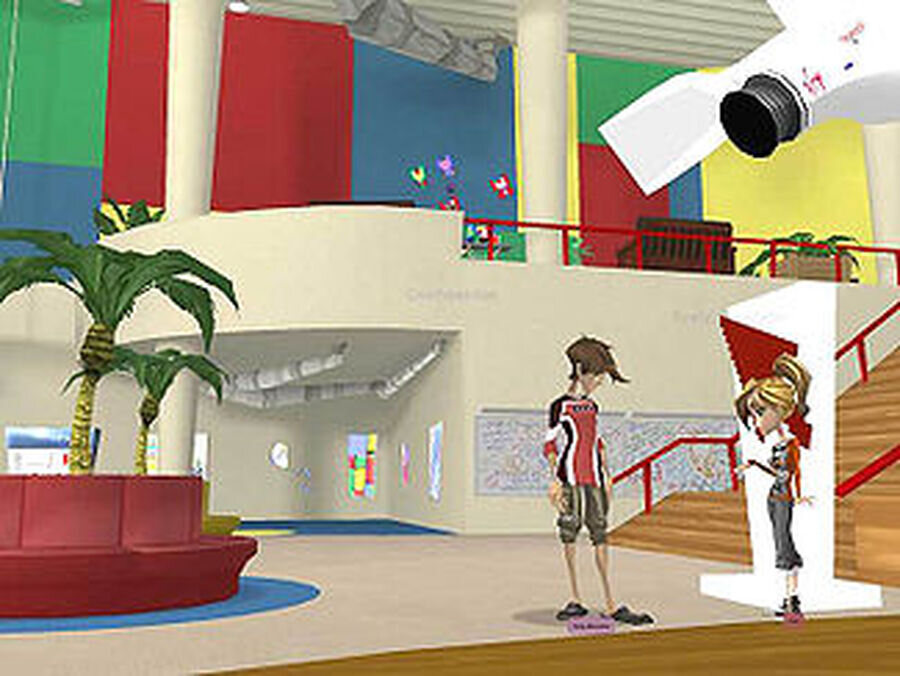
Google Lively was a browser-based virtual world: small 3D rooms you could embed on a web page, with avatars, furniture from a catalogue, YouTube videos and Picasa photos on the walls, and chat in comic speech bubbles. It was built as a 20 percent project by a team under Niniane Wang and launched on 8 July 2008 for Windows with Internet Explorer or Firefox. Google announced its closure on 19 November 2008 and shut it down on 31 December 2008.
Timeline [edit]
- 2008
-
8 July 2008
Launch
Lively launches in Google Labs
Windows only, with a download and Flash.
-
19 November 2008
Shutdown announced
Google says Lively will close
Users told to take screenshots of their rooms.
-
31 December 2008
Shutdown
Lively goes dark
How it looked [edit]

The site through time
Read the old front page here, in one piece, from our own capture: lively.com, 3 September 2008 →
Browse lively.com as it was, via the Internet Archive's Wayback Machine:
Ownership [edit]
Why it shut down [edit]
Official line: Google said on 19 November 2008 that it wanted to prioritise its core search, ads and apps business and that Lively would close on 31 December 2008. Users were told to take screenshots and videos of their rooms before then. It had been public for under six months.
Our analysis: Lively was a 20 percent project that shipped into the wrong year. It was Windows only, needed a download plus Flash, and gave you a room with a catalogue of furniture, an avatar, and text chat in speech bubbles, at a moment when Second Life had already peaked and Facebook was where people actually talked. There was no economy, no user-made content and no reason to return. Then the financial crisis arrived and Google, for the first time, started cancelling things. Lively was the most obviously unnecessary product it had, and it went first.
History [edit]
A room on your web page
Lively came out of Google's 20 percent time. Niniane Wang, an engineering manager, had been building it with a small team and some art from X-Ray Kid Studios, and students at Arizona State University tested it for months. On 8 July 2008 Google put it in Labs as "Lively by Google". You installed a small Windows program, picked an avatar, decorated a room from a catalogue of furniture and wallpaper, and then embedded the room on your blog or MySpace page. Up to twenty people could be in it at once; what they typed appeared as cartoon bubbles over their heads, and you could hang YouTube videos and Picasa photos on the walls.
Press coverage compared it to Second Life and found it much smaller: no money, no building, no selling, and a catalogue instead of user-made objects. Some of the first public rooms filled with the kind of behaviour you would expect, and Google added moderation. Traffic fell quickly after the launch week.
Five months
On 19 November 2008 the Lively team wrote that Google had "decided to prioritize our resources and focus more on our core search, ads and apps business" and that Lively would close at the end of the year. The post suggested users take screenshots and record videos of their rooms. The service went off on 31 December 2008, making it one of the shortest-lived consumer products Google has launched, and an early sign of the product cull that would become routine in 2011.
The domain today
lively.com belongs to a different company. Nothing of the rooms survives outside screenshots and a handful of YouTube walkthroughs.
Similar projects
 Springpad
The smart notebook that turned everything you saved into something useful, loved by five million people and unable to pay for itself
2008–2014
Springpad
The smart notebook that turned everything you saved into something useful, loved by five million people and unable to pay for itself
2008–2014
 Pocket
Eighteen years of saved-for-later, gone before you read it
2007–2025
Pocket
Eighteen years of saved-for-later, gone before you read it
2007–2025
 Google Sidewiki
A comment box Google bolted onto every website in the world, whether the owner wanted it or not
2009–2011
Google Sidewiki
A comment box Google bolted onto every website in the world, whether the owner wanted it or not
2009–2011
 Hipmunk
The flight search that sorted by agony, bought by a corporate expense company and switched off while its founders were trying to buy it back
2010–2020
Hipmunk
The flight search that sorted by agony, bought by a corporate expense company and switched off while its founders were trying to buy it back
2010–2020
 MobileMe
The Apple service Steve Jobs apologised for
2008–2012
MobileMe
The Apple service Steve Jobs apologised for
2008–2012
 Google Cloud Print
Print from anything to any printer over the internet: ten years in beta, then switched off at the end of 2020
2010–2020
Google Cloud Print
Print from anything to any printer over the internet: ten years in beta, then switched off at the end of 2020
2010–2020
Sources [edit]
- Be who you want on the web pages you visit Google official blog 8 July 2008 [archived]
- Lively no more Google official blog 19 November 2008 [archived]
- Google introduces a cartoonish virtual world The New York Times 9 July 2008 [archived]
- Google Lively Wikipedia 1 January 2024 [archived]
Last verified: 22 August 2026. Spotted an error? Suggest an edit (corrections with sources are reviewed and applied).