
Loon
Alphabet's internet balloons, nine years in the stratosphere and one commercial customer, grounded in 2021
Loon was a Google X project, announced on 14 June 2013 with a test in New Zealand, to deliver internet from balloons floating in the stratosphere. It provided emergency LTE in Peru and Puerto Rico, was spun out as Loon LLC in July 2018, raised $125 million from SoftBank in 2019 and launched its first commercial service with Telkom Kenya on 7 July 2020. Alphabet announced its closure on 21 January 2021 and the Kenyan service ended on 1 March 2021.
Timeline [edit]
- 2013
-
14 June 2013
Launch
Project Loon announced
30 balloons over Christchurch, New Zealand.
- 2017
-
20 October 2017
Feature
Emergency LTE in Puerto Rico
Service to 200,000 people after Hurricane Maria.
- 2018
-
11 July 2018
other
Loon LLC spun out of X
An Alphabet company.
- 2019
-
24 April 2019
Funding
$125 million from SoftBank's HAPSMobile
- 2020
-
7 July 2020
Launch
Commercial service in Kenya
35 balloons with Telkom Kenya.
- 2021
-
21 January 2021
Shutdown announced
Alphabet to close Loon
"No way to get the costs low enough".
-
March 2021
Shutdown
Kenyan service ends; wind-down
The balloons come down.
How it looked [edit]
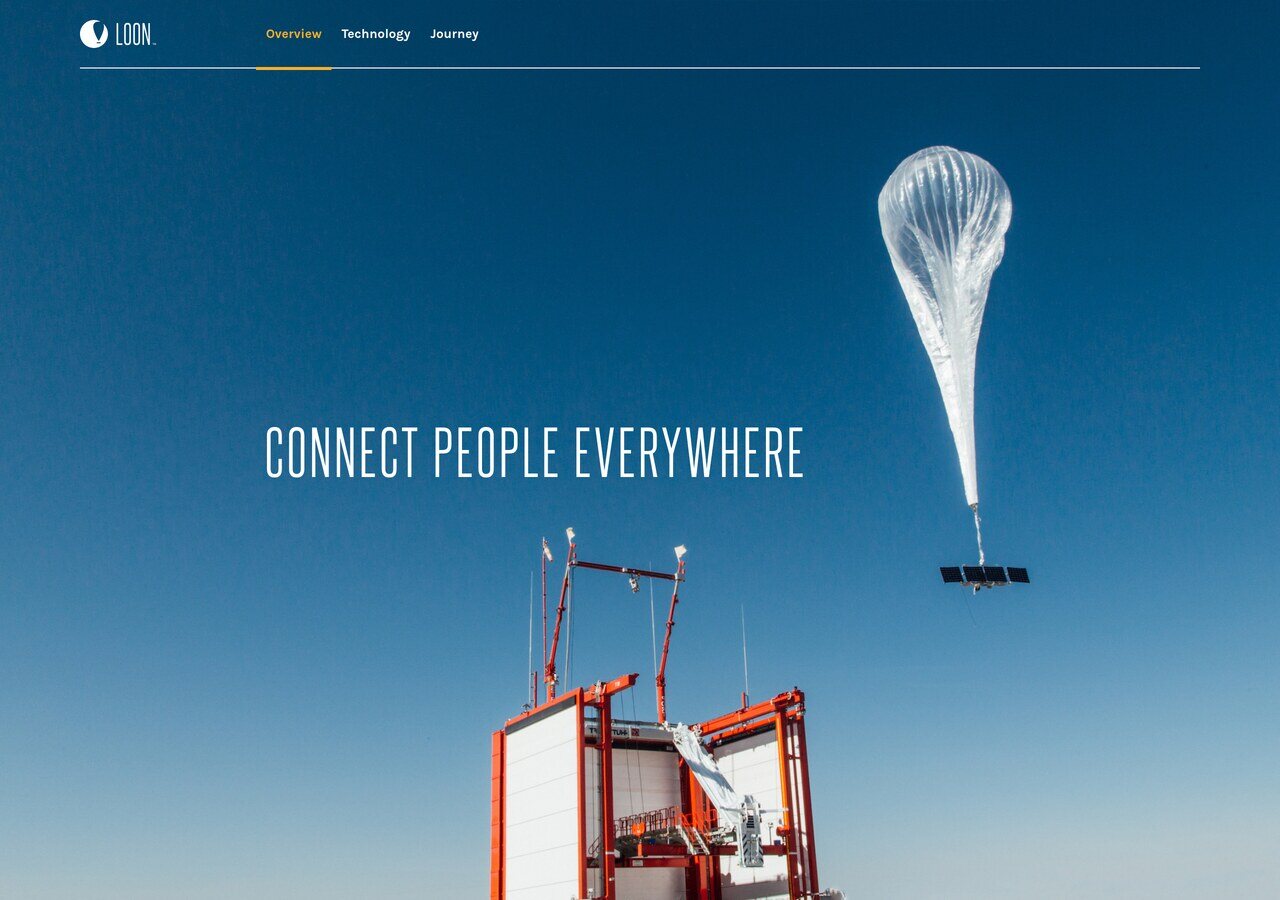
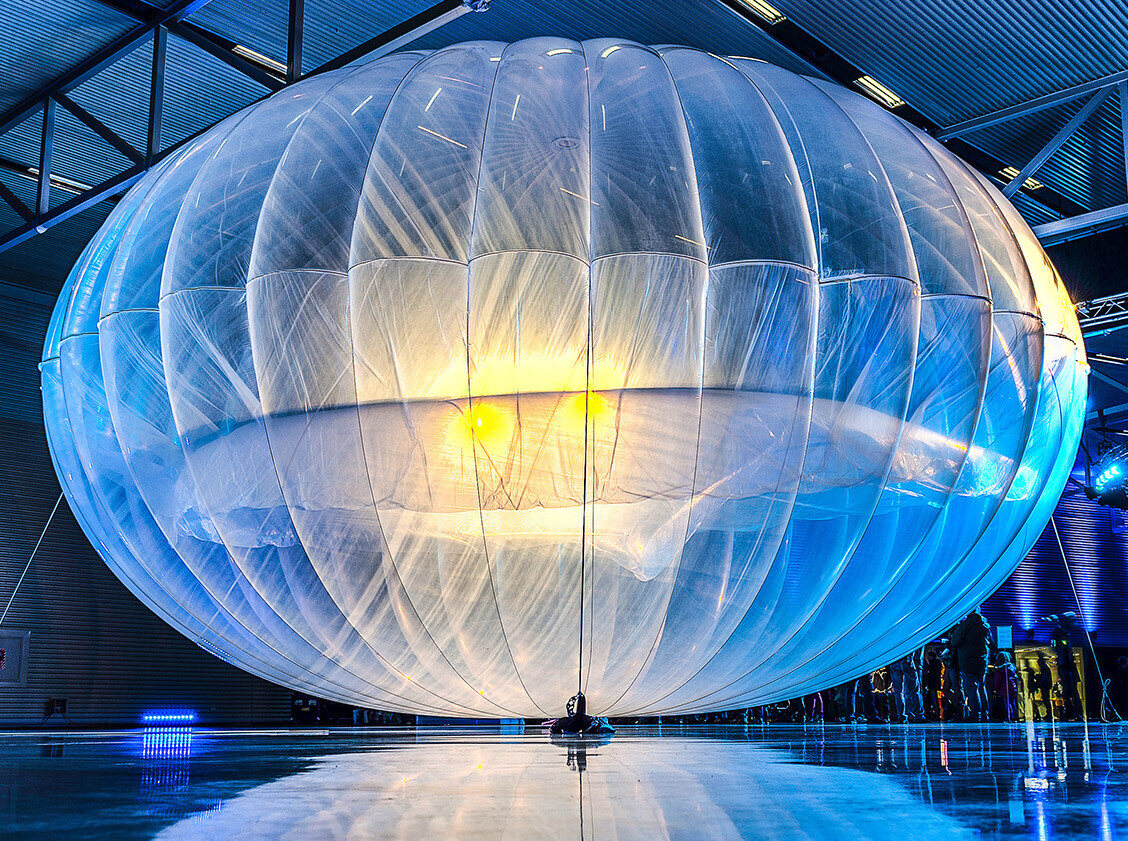
The site through time
Browse loon.com as it was, via the Internet Archive's Wayback Machine:
Ownership [edit]
Why it shut down [edit]
Official line: On 21 January 2021 Alphabet said it was closing Loon because, despite the technology working, it had not found "a way to get the costs low enough to build a long-term, sustainable business"; the balloon service in Kenya, its only commercial deployment, ended on 1 March 2021 and the company wound down over the following months. Some of the technology, the free-space optical links, went to another X project, Taara.
Our analysis: Loon solved the hard problems: balloons that stayed up for hundreds of days, steered by machine learning through wind layers, handing off LTE to ordinary phones. What it never solved was the customer. The people it was meant to connect were, by definition, the ones operators could not make money serving, and a balloon fleet is not cheaper than a tower. Alphabet kept it for nine years, spun it out, took SoftBank's money, and shut it as soon as the moonshot had to become a business.
History [edit]
Balloons in the stratosphere
Google X announced Project Loon on 14 June 2013 with a pilot over Christchurch, New Zealand: 30 balloons at about 20 kilometres, above the weather and the airliners, each carrying a solar-powered radio that beamed internet to a special antenna on the ground. The idea, from Rich DeVaul and led by Mike Cassidy, was to reach the two-thirds of the world without affordable connectivity by floating base stations over it, steering them by moving up and down into winds blowing the right way. Early balloons lasted days; by 2016 they lasted months, the steering was done by a machine-learning system, and the radios talked LTE straight to ordinary phones.
Loon proved itself in emergencies. It carried LTE to flood-hit Peru in 2017 and, after Hurricane Maria in October 2017, to more than 200,000 people in Puerto Rico with AT&T and T-Mobile. Alphabet made it a company, Loon LLC, on 11 July 2018, and in April 2019 SoftBank's HAPSMobile invested $125 million. Balloons set records: 312 days aloft, then a million hours of flight across the fleet, and a balloon that flew 223 days on one trip.
Kenya, then grounded
The first and only commercial service launched with Telkom Kenya on 7 July 2020, covering about 50,000 square kilometres of western and central Kenya with a fleet of 35 balloons launched from the United States and Puerto Rico and steered across the Atlantic. Six months later, on 21 January 2021, Alphabet said Loon would close: the technology worked, the economics did not. The Kenyan service ended on 1 March 2021, the balloons were brought down over the following months, and Loon's data on stratospheric flight was released to researchers. Its laser link technology continued as Taara, which in 2021 was carrying traffic across the Congo river.
The domain today
loon.com redirects to X, Alphabet's moonshot division.
Similar projects
 Springpad
The smart notebook that turned everything you saved into something useful, loved by five million people and unable to pay for itself
2008–2014
Springpad
The smart notebook that turned everything you saved into something useful, loved by five million people and unable to pay for itself
2008–2014
 Google Sidewiki
A comment box Google bolted onto every website in the world, whether the owner wanted it or not
2009–2011
Google Sidewiki
A comment box Google bolted onto every website in the world, whether the owner wanted it or not
2009–2011
 Hipmunk
The flight search that sorted by agony, bought by a corporate expense company and switched off while its founders were trying to buy it back
2010–2020
Hipmunk
The flight search that sorted by agony, bought by a corporate expense company and switched off while its founders were trying to buy it back
2010–2020
 AOL Dial-Up
The modem noise stopped, AOL did not
1991–2025
AOL Dial-Up
The modem noise stopped, AOL did not
1991–2025
 Pocket
Eighteen years of saved-for-later, gone before you read it
2007–2025
Pocket
Eighteen years of saved-for-later, gone before you read it
2007–2025
 MobileMe
The Apple service Steve Jobs apologised for
2008–2012
MobileMe
The Apple service Steve Jobs apologised for
2008–2012
Sources [edit]
- Google announces Project Loon: balloon-powered internet for remote areas TechCrunch 14 June 2013 [archived]
- Google tests balloons to beam internet from near space BBC News 15 June 2013 [archived]
- Alphabet may have spun out Project Loon into its own company Engadget 13 October 2017 [archived]
- Inside X, the moonshot factory racing to build the next Google Wired 11 July 2018 [archived]
- Google's Loon brings internet-by-balloon to Kenya BBC News 19 July 2018 [archived]
- Alphabet spinout Loon grabs $125M from SoftBank's HAPSMobile TechCrunch 24 April 2019 [archived]
- Alphabet is shutting down Loon, its internet balloon company The Verge 21 January 2021 [archived]
- Alphabet is grounding Loon, but won't call it a failure Wired 21 January 2021 [archived]
- High-speed internet via airborne beams of light BBC News 17 September 2021 [archived]
Last verified: 16 August 2026. Spotted an error? Suggest an edit (corrections with sources are reviewed and applied).