Amazon Dash Button
A $4.99 button that ordered detergent, launched on the eve of April Fools' Day
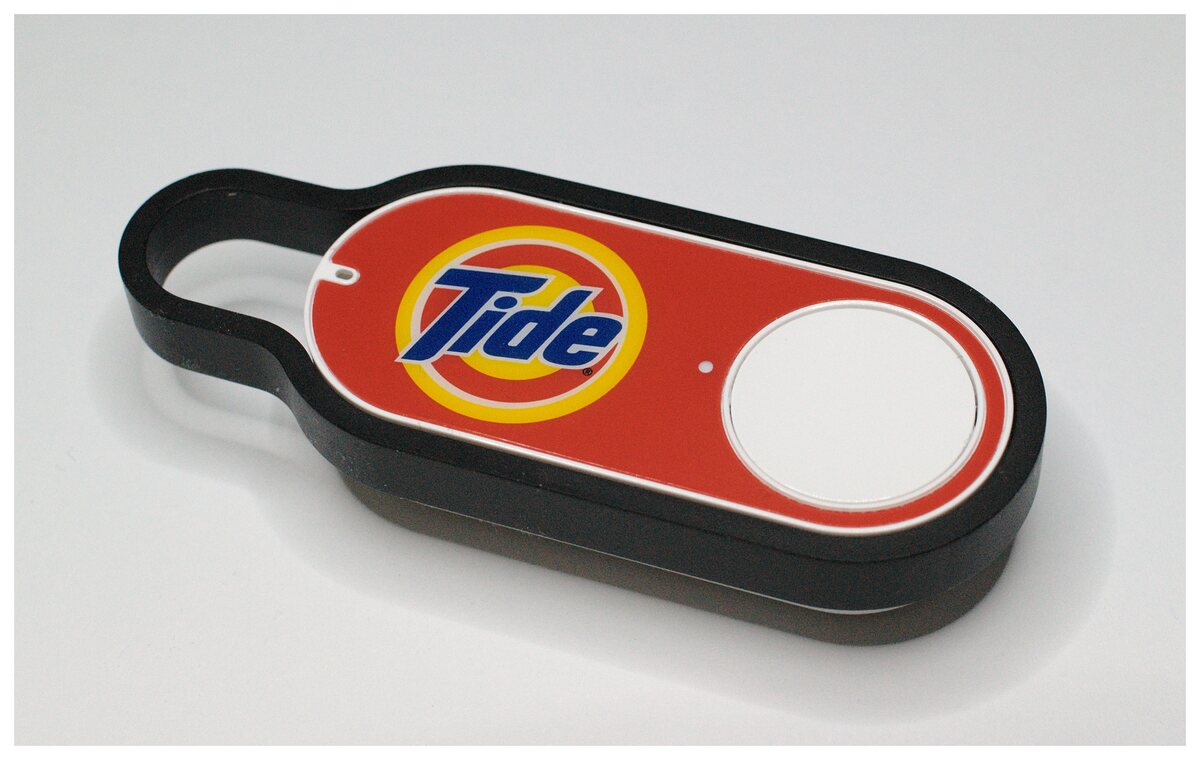
The Amazon Dash Button was a small Wi-Fi button branded for a single product, Tide or Bounty or Gatorade, that placed an Amazon order when pressed. Launched for Prime members on 31 March 2015, widely mistaken for an April Fools' joke, it grew to hundreds of brands before Amazon stopped selling it in February 2019 and switched every button off on 31 August 2019, pointing customers to Alexa and self-reordering appliances instead.
Timeline [edit]
- 2014
-
4 April 2014
Feature
The Dash Wand
A barcode scanner for AmazonFresh, the first product with the Dash name.
- 2015
-
31 March 2015
Launch
The Dash Button launches
Prime-only, 18 brands, sold out in a day, mistaken for an April Fools' joke.
- 2016
-
12 May 2016
Feature
The AWS IoT Button
Amazon sells a programmable version to the hackers who had been reprogramming the real one.
- 2017
-
25 April 2017
Peak
Four orders a minute
More than 300 brands, orders up fourfold in a year.
- 2019
-
10 January 2019
Legal
A Munich court rules the button illegal in Germany
No price shown at the moment of ordering.
-
28 February 2019
Shutdown announced
Amazon stops selling Dash Buttons
Voice ordering and self-reordering appliances have taken over.
-
31 August 2019
Shutdown
Existing buttons are switched off
Pressing one no longer does anything.
How it looked [edit]
The site through time
Browse amazon.com as it was, via the Internet Archive's Wayback Machine:
Ownership [edit]
Why it shut down [edit]
Official line: Amazon stopped selling Dash Buttons worldwide on 28 February 2019 and disabled the existing ones on 31 August 2019, saying customers had moved to ordering by voice through Alexa and to appliances that reorder their own supplies through Dash Replenishment. A German court had ruled in January 2019 that the button broke consumer law by not showing the price before the order.
Our analysis: The Dash Button was a clever answer to a question Amazon quickly answered better. A physical button per brand, stuck to a washing machine, was a stunt that worked as marketing and as a probe of how impulsively people would reorder. Once Alexa could take the same order by voice, and a printer could reorder its own ink, a hundred branded plastic buttons around the house looked like clutter.
History [edit]
Press to buy
Amazon announced the Dash Button on 31 March 2015, and enough people assumed it was an early April Fools' joke that the company had to say it was not. The device was a plastic stick the size of a pack of gum with one brand's logo on it and one button. Set it up once with the Amazon app, stick it near where the product ran out, and a press placed the order, with the price credited back after the first purchase so the $4.99 button was effectively free. It launched invitation-only for Prime members with 18 brands including Tide, Bounty, Gatorade, Huggies and Cottonelle, and the first batch sold out within a day.
The Dash name covered a small family: the Dash Wand barcode scanner for AmazonFresh, launched in 2014, the buttons, and Dash Replenishment, a service that let manufacturers build reordering into their own devices. The button was the one people noticed. Hobbyists hacked it within weeks into a generic Internet of Things trigger, and Amazon leaned in with a programmable AWS IoT Button in 2016.
Growth and clutter
By 2017 Amazon said Dash Button orders were being placed more than four times a minute, up from once a minute a year earlier, across more than 300 brands and in several countries. Set against Amazon's overall volume that was tiny, and critics pointed out that the button served the brands, which paid to be on it, more than the customer, who could not see the current price before pressing.
That last point had legal weight. In January 2019 a court in Munich ruled the button violated German consumer protection law because it did not show the price and product details at the moment of ordering.
Voice wins
On 28 February 2019 Amazon stopped selling physical Dash Buttons worldwide, saying that voice ordering through Alexa and Dash Replenishment inside appliances had taken over the job. Existing buttons kept working until 31 August 2019, when Amazon disabled them, and the virtual Dash Buttons in its app quietly disappeared as well. The idea survived inside the printers, dishwashers and coffee machines that reorder their own supplies, and in the Alexa shopping list.
The domain today
amazon.com is very much alive; the Dash Button pages on it were retired and redirect to help articles about Dash Replenishment.
Similar projects
 Pebble
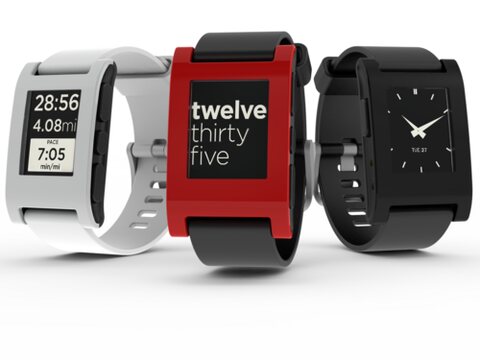
The smartwatch Kickstarter built, and Fitbit buried
2013–2018
Pebble
The smartwatch Kickstarter built, and Fitbit buried
2013–2018
 iPod
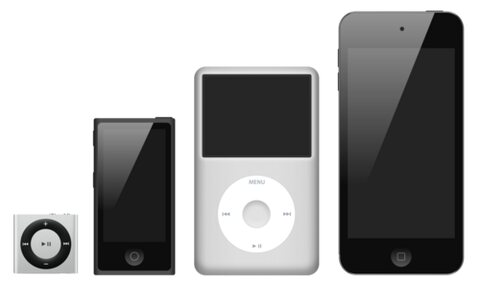
1,000 songs in your pocket
2001–2022
iPod
1,000 songs in your pocket
2001–2022
 Zune
Microsoft's answer to the iPod, five years late
2006–2015
Zune
Microsoft's answer to the iPod, five years late
2006–2015
 Humane AI Pin
The $699 phone killer that HP switched off ten months in
2024–2025
Humane AI Pin
The $699 phone killer that HP switched off ten months in
2024–2025
 Project Ara
Google's modular phone, demoed for three years and never sold
2013–2016
Project Ara
Google's modular phone, demoed for three years and never sold
2013–2016
 Chromecast
The $35 dongle that sold over 100 million, retired for a box
2013–2024
Chromecast
The $35 dongle that sold over 100 million, retired for a box
2013–2024
Sources [edit]
- Amazon's new Dash buttons let you order goods with a press Fortune 31 March 2015 [archived]
- Amazon Dash and Dash Replenishment Service Are Growing Fortune 25 April 2017 [archived]
- Amazon stops selling Dash Buttons The Verge 28 February 2019 [archived]
- Amazon Dash buttons discontinued BBC News 1 March 2019 [archived]
- Amazon is killing off the Dash button later this month TechCrunch 1 August 2019 [archived]
Last verified: 15 August 2026. Spotted an error? Suggest an edit (corrections with sources are reviewed and applied).