Microsoft Edge Legacy
Microsoft's fresh start that lasted one engine
The original Microsoft Edge, launched with Windows 10 in 2015 as Project Spartan, was Microsoft's clean break from Internet Explorer: a new minimal browser on the new EdgeHTML engine. It was quicker than its reputation, which never recovered from sites built only for Chrome. In 2018 Microsoft gave up on its own engine, rebuilt Edge on Chromium, and switched the original off in March 2021. This entry is about that first Edge; the Chromium one is alive.
Timeline [edit]
- 2015
-
21 January 2015
Launch
Project Spartan is revealed
A new browser for Windows 10, free of Internet Explorer's baggage.
-
29 July 2015
Launch
Edge ships with Windows 10
New engine, minimal interface, benchmarks to brag about.
- 2018
-
6 December 2018
Shutdown announced
Microsoft adopts Chromium
The last big independent engine outside Gecko and WebKit is retired.
- 2020
-
15 January 2020
Decline
The Chromium Edge ships
The original becomes "Edge Legacy" overnight.
- 2021
-
9 March 2021
Shutdown
Support ends
An April update then removes Edge Legacy from Windows 10 machines.
How it looked [edit]
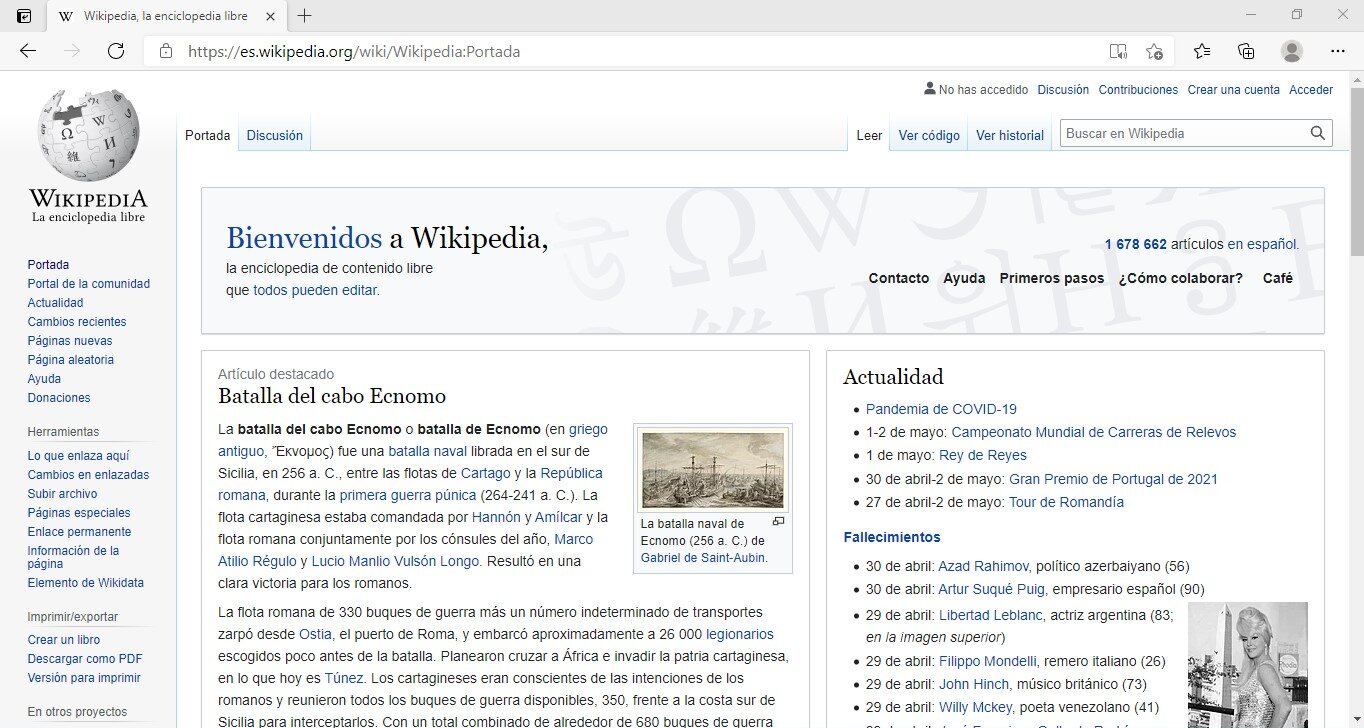
The site through time
Browse microsoft.com as it was, via the Internet Archive's Wayback Machine:
Ownership [edit]
Why it shut down [edit]
Official line: Microsoft announced in December 2018 that Edge would be rebuilt on Chromium, Google's open-source browser engine, because maintaining a compatible independent engine had become untenable. The EdgeHTML-based original, retroactively named Edge Legacy, lost support on 9 March 2021 and was removed from Windows 10 by update the following month.
Our analysis: Edge Legacy was fast and modern and it did not matter. Web developers tested against Chrome, so sites broke in Edge through no fault of its engine, and users measured the browser by those breakages. Microsoft concluded that the web now effectively had one rendering engine and joined it, which fixed Edge and ended the last large-scale alternative to Chromium outside Firefox and Safari.
History [edit]
After Internet Explorer
By 2015 the Internet Explorer brand was beyond saving, and Microsoft knew it. Windows 10 shipped on 29 July 2015 with a successor built under the codename Project Spartan: a minimal interface, a new rendering engine called EdgeHTML with the old compatibility layers stripped out, inking and annotation on pages, and Cortana wired into the address bar. The name Microsoft Edge was announced that April.
The engine was genuinely quick, and Microsoft spent years publishing benchmarks to prove it. It did not help. Edge only ran on Windows 10, updated only with the operating system twice a year while Chrome updated every six weeks, and, decisively, the web was no longer built for standards, it was built for Chrome. Sites broke in Edge because nobody tested them in Edge, and every breakage read as Edge's fault. Usage stayed in the low single digits, much of it people downloading Chrome.
Joining the monoculture
On 6 December 2018 Microsoft announced the surrender: Edge would be rebuilt on Chromium, the open-source engine behind Chrome. The move fixed compatibility overnight, freed the browser from the Windows release cycle, and put it on macOS. The new Chromium Edge shipped on 15 January 2020, and the original was quietly renamed Microsoft Edge Legacy.
Support for Edge Legacy ended on 9 March 2021, and an April 2021 Windows update removed it from machines entirely, replacing it with the new Edge. It is one of the few browsers to have been not just discontinued but actively deleted from its users' computers by its maker.
Its death mattered beyond Microsoft. EdgeHTML was the last new browser engine a major company attempted, and its failure is the standard evidence that the open web now runs, in practice, on three engines, of which one dominates. Microsoft Edge itself continues, but it is a different program sharing a name, the same arrangement Internet Explorer's entry describes from the other side.
Similar projects
 NCSA Mosaic
Put the pictures in the page, and the web took off
1993–1997
NCSA Mosaic
Put the pictures in the page, and the web took off
1993–1997
 Internet Explorer
The browser that won the war and lost the peace
1995–2022
Internet Explorer
The browser that won the war and lost the peace
1995–2022
 Netscape Navigator
The browser that opened the web
1994–2008
Netscape Navigator
The browser that opened the web
1994–2008
 Flock
The social web browser: Firefox, then Chromium, with Facebook and Twitter in the sidebar, bought by Zynga and closed in 2011
2005–2011
Flock
The social web browser: Firefox, then Chromium, with Facebook and Twitter in the sidebar, bought by Zynga and closed in 2011
2005–2011
 AOL Explorer
AOL's own tabbed browser on top of Internet Explorer, released in 2005, folded into OpenRide and AOL Desktop within two years
2005–2007
AOL Explorer
AOL's own tabbed browser on top of Internet Explorer, released in 2005, folded into OpenRide and AOL Desktop within two years
2005–2007
 Windows Media Center
The living-room PC that arrived before streaming
2002–2015
Windows Media Center
The living-room PC that arrived before streaming
2002–2015
Sources [edit]
- Microsoft Edge is the official name for the new browser The Verge 29 April 2015 [archived]
- Microsoft will uninstall its old Edge browser from Windows PCs on April 13th Engadget 5 February 2021 [archived]
Last verified: 14 August 2026. Spotted an error? Suggest an edit (corrections with sources are reviewed and applied).