
BlackBerry PlayBook
RIM's seven-inch tablet, shipped without email, written down by half a billion, switched off in 2022
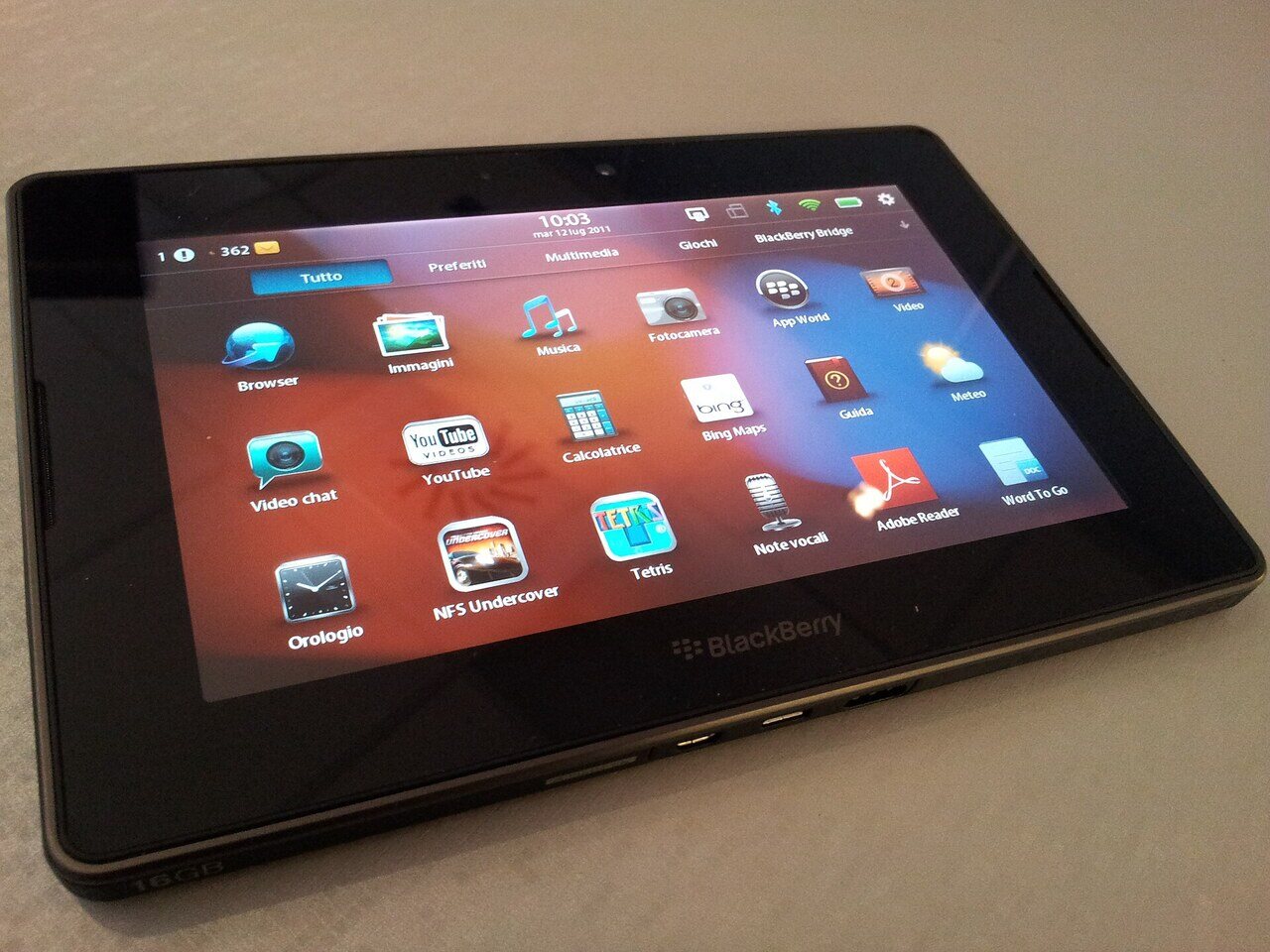
The BlackBerry PlayBook was Research In Motion's seven-inch tablet, announced on 27 September 2010 and released on 19 April 2011 at $499, the first device to run the QNX-based operating system that became BlackBerry 10. It launched without native email or calendar apps, sold about 2.5 million units over its life mostly at fire-sale prices after a $485 million write-down, lost its promised BlackBerry 10 upgrade in June 2013 and stopped working when BlackBerry ended its legacy services on 4 January 2022.
Timeline [edit]
- 2010
-
27 September 2010
Feature
PlayBook announced at DevCon
A QNX tablet to challenge the iPad.
- 2011
-
19 April 2011
Launch
On sale in the US and Canada
$499; no native email without a tethered BlackBerry.
-
2 December 2011
Decline
$485 million write-down
RIM writes off unsold PlayBook inventory.
- 2012
-
3 January 2012
Decline
Price cut to $299, then $199
The fire sale finally moves units.
-
21 February 2012
Version
PlayBook OS 2.0
Email, calendar and an Android app player at last.
-
9 August 2012
Version
4G LTE PlayBook
Canadian carriers only.
- 2013
-
28 June 2013
Shutdown announced
No BlackBerry 10 for the PlayBook
Heins cancels the promised update; development ends at OS 2.1.
- 2020
-
13 September 2020
Shutdown announced
Legacy services end date set
4 January 2022 for BlackBerry OS, BB10 and PlayBook OS.
- 2022
-
4 January 2022
Shutdown
Legacy services decommissioned
PlayBooks "no longer reliably function".
How it looked [edit]
The site through time
Browse blackberry.com as it was, via the Internet Archive's Wayback Machine:
Ownership [edit]
Key figures [edit]
| Metric | Value | As of | Confidence |
|---|---|---|---|
| Downloads ▲ | 2.5 million | June 2013 | Estimated Sum of RIM's reported quarterly PlayBook shipments from April 2011 to May 2013, most of them after the price cuts |
Confirmed official figures · Reported media, cites a source · Estimated analyst or our estimate
Why it shut down [edit]
Official line: The PlayBook launched on 19 April 2011 without a native email client, needing a BlackBerry phone tethered to it, and sold so poorly that RIM wrote down $485 million of unsold stock in December 2011 and cut the price to $199. On 28 June 2013 new CEO Thorsten Heins cancelled the promised BlackBerry 10 update, ending development. On 13 September 2020 BlackBerry announced that legacy services for BlackBerry OS, BlackBerry 10 and PlayBook OS 2.1 would be decommissioned on 4 January 2022, after which the tablets no longer reliably work.
Our analysis: The PlayBook was a good piece of hardware running a good operating system, QNX, that RIM had bought precisely for it, and it was launched half-finished because the company needed a tablet in the iPad's first year. Shipping a BlackBerry without email was the sort of decision that only makes sense inside a company that assumed every buyer already owned a BlackBerry. Its real legacy is BlackBerry 10, which grew out of the PlayBook OS and arrived two years too late.
History [edit]
A tablet in a hurry
RIM announced the PlayBook at its DevCon on 27 September 2010, five months after the first iPad. It was a seven-inch, 400-gram tablet with a dual-core TI OMAP chip, a 1024x600 screen, real multitasking with swipe gestures borrowed from Palm, full Flash and HTML5 support, and a brand-new operating system built on QNX, the real-time OS RIM had bought that April. On paper it was the most capable small tablet of its year. In the hand, at launch on 19 April 2011 in the US and Canada, it had no native email, calendar or contacts apps: you had to "Bridge" it over Bluetooth to a BlackBerry phone. Reviewers were united in their disbelief.
RIM shipped 500,000 in the first quarter, then 200,000, then 150,000. In November 2011 it sold them to staff for $99; on 2 December it took a $485 million pre-tax charge to write down inventory, and in January 2012 every model dropped to $299 and soon $199. PlayBook OS 2.0, released on 21 February 2012, finally added email, calendar and an Android app player, and the fire-sale price moved units: about 2.5 million shipped in total, most of them below cost. A 4G LTE model reached Canadian carriers in August 2012.
No BlackBerry 10
The PlayBook OS became the base of BlackBerry 10, launched on phones in January 2013, and RIM had promised the tablet would get it. On 28 June 2013, on an earnings call, CEO Thorsten Heins cancelled that update, saying the company could not deliver the experience it wanted on the hardware. Development stopped at OS 2.1; a security-hardened SecuTablet based on a Samsung tablet followed in 2015 and went nowhere.
The tablets kept working, largely offline, until BlackBerry's clean-up of its past. On 9 September 2020 the company announced that on 4 January 2022 it would decommission legacy services for BlackBerry 7.1 OS and earlier, BlackBerry 10 and PlayBook OS 2.1 and earlier, after which the devices would "no longer reliably function", including for Wi-Fi, BlackBerry ID and app downloads. That date is the PlayBook's grave.
The domain today
blackberry.com is the cybersecurity company's site; its end-of-life FAQ still lists PlayBook OS 2.1 among the services terminated on 4 January 2022.
Similar projects
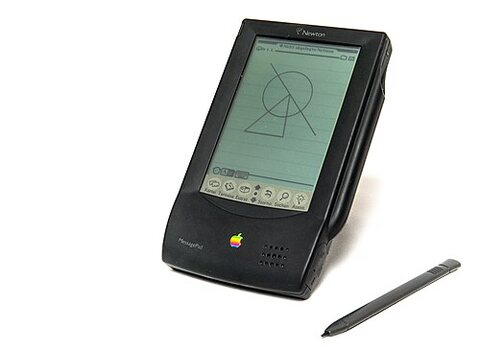 Apple Newton
The handheld that was right, ten years early
1993–1998
Apple Newton
The handheld that was right, ten years early
1993–1998
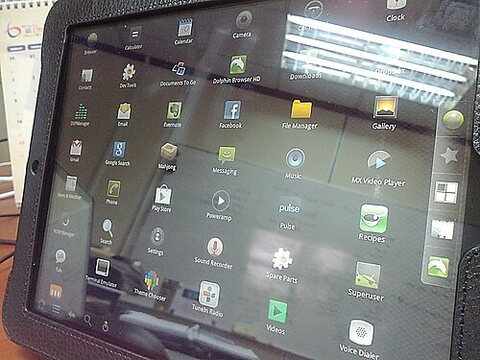 HP TouchPad
Killed 49 days after launch
2011–2011
HP TouchPad
Killed 49 days after launch
2011–2011
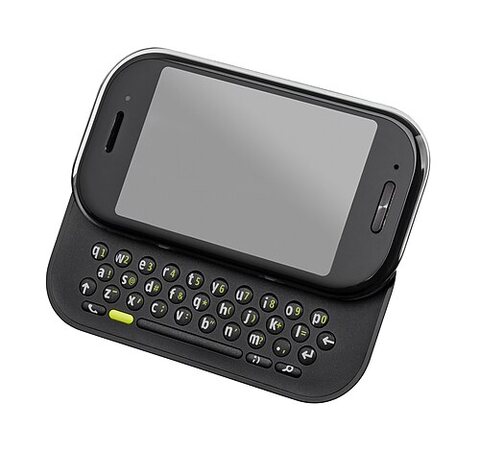 Microsoft Kin
Dead in 48 days
2010–2011
Microsoft Kin
Dead in 48 days
2010–2011
 Google Nexus
Android the way Google meant it, until Google wanted the whole phone
2010–2016
Google Nexus
Android the way Google meant it, until Google wanted the whole phone
2010–2016
 Amazon Fire Phone
Amazon's 3D phone, $199 in July, 99 cents by September, $170 million written off by October
2014–2015
Amazon Fire Phone
Amazon's 3D phone, $199 in July, 99 cents by September, $170 million written off by October
2014–2015
 Nokia Lumia
Nokia's bright Windows Phones, and the bet that took the company down with them
2011–2017
Nokia Lumia
Nokia's bright Windows Phones, and the bet that took the company down with them
2011–2017
Sources [edit]
- RIM announces BlackBerry 'PlayBook' tablet NBC News (AP) 27 September 2010 [archived]
- BlackBerry PlayBook review Engadget 13 April 2011 [archived]
- BlackBerry PlayBook review CNET 14 April 2011
- Research In Motion Reports Second Quarter Fiscal 2012 Results Research In Motion (GlobeNewswire) 15 September 2011 [archived]
- BlackBerry PlayBook in US price plummet The Register 3 January 2012 [archived]
- BlackBerry PlayBook tablet will get BlackBerry 10 update Ars Technica 30 January 2013 [archived]
- BlackBerry PlayBook is as good as dead Mashable 28 June 2013 [archived]
- BlackBerry legacy devices and services will reach End of Life on January 4, 2022 CrackBerry 13 September 2020 [archived]
- BlackBerry 10 and BlackBerry OS Services FAQ: End of Life BlackBerry 4 January 2022 [archived]
Last verified: 15 August 2026. Spotted an error? Suggest an edit (corrections with sources are reviewed and applied).