
Palm Pre
The comeback phone that invented the card interface and could not save Palm
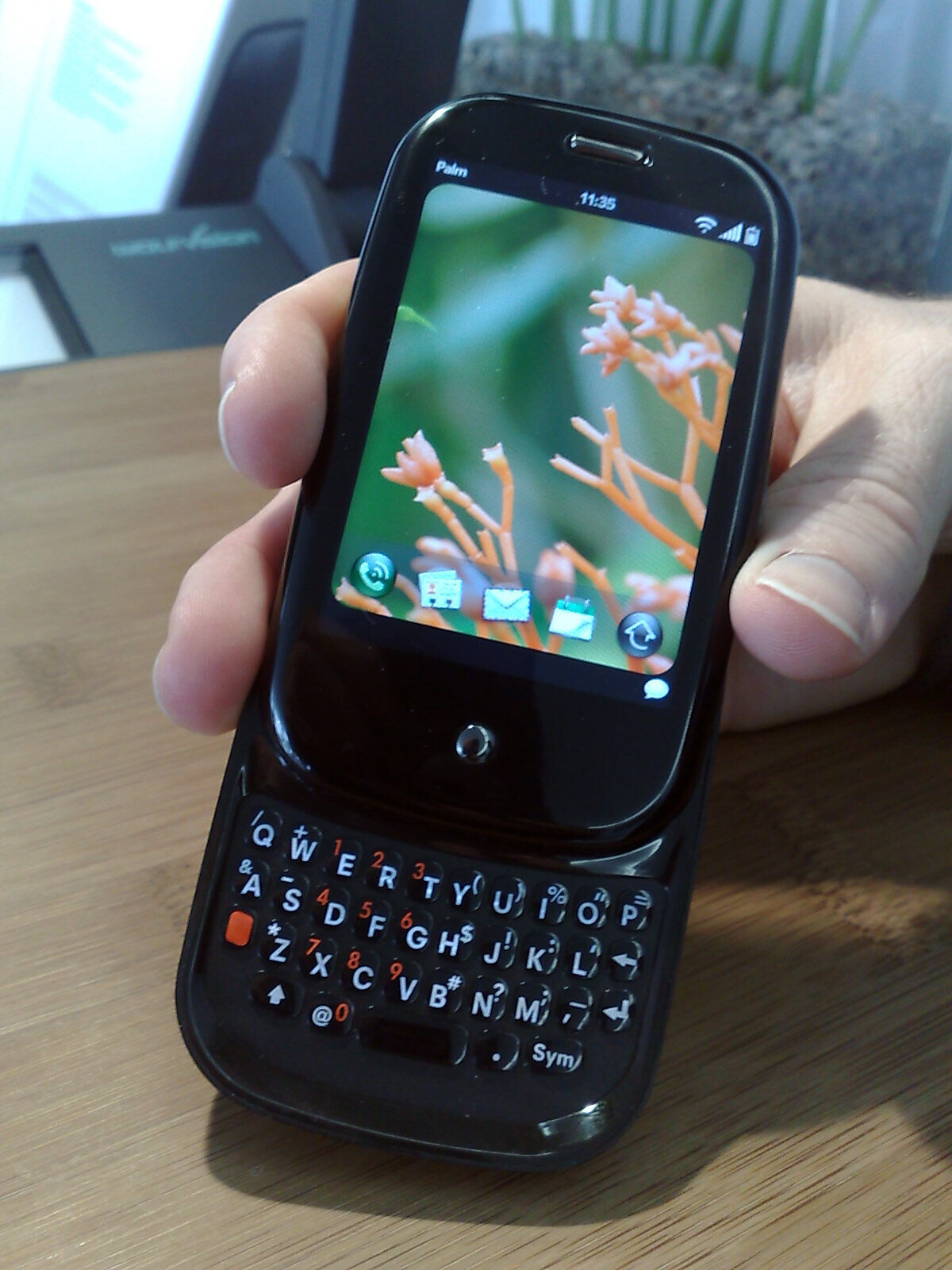
The Palm Pre was the phone that introduced webOS, unveiled at CES on 8 January 2009 and sold from 6 June 2009 on Sprint: a curved slider with a keyboard and an interface of swipeable "cards" and gestures that Apple and Google later adopted. Palm ran out of money and was bought by HP in 2010; HP shipped two more Pres and then killed all webOS hardware on 18 August 2011. The Pre's ideas outlived it in every phone.
Timeline [edit]
- 2009
-
8 January 2009
Feature
Unveiled at CES
Cards, gestures, Synergy and the Touchstone; Best of Show.
-
6 June 2009
Launch
On sale on Sprint
$199 after rebate; sells out the first weekend.
- 2010
-
28 April 2010
Acquisition
HP agrees to buy Palm
$1.2 billion, mainly for webOS.
-
19 October 2010
Version
Pre 2
The first webOS phone under HP.
- 2011
-
9 February 2011
Feature
Pre 3 and Veer announced
HP promises webOS on phones, tablets, printers and PCs.
-
18 August 2011
Shutdown
HP kills webOS devices
The Pre 3 dies two days after its European launch.
- 2013
-
25 February 2013
other
webOS sold to LG
It ends up running televisions.
How it looked [edit]
The site through time
Read the old front page here, in one piece, from our own capture: palm.com, 25 June 2009 →
Browse palm.com as it was, via the Internet Archive's Wayback Machine:
Ownership [edit]
Why it shut down [edit]
Official line: The Pre sold well for a few weeks on Sprint and then slowed; Palm ran short of money and was bought by HP for $1.2 billion in April 2010. HP shipped the Pre 2 and Pre 3, then on 18 August 2011 announced it would stop making webOS devices, seven weeks after the Pre 3 was announced and a month after the TouchPad shipped. webOS was open-sourced and later sold to LG for televisions.
Our analysis: The Pre was the first phone after the iPhone that felt like a new idea rather than a copy: cards, gestures, synergy between accounts, all now standard. It was late, exclusive to the wrong carrier, built on cheap hardware and made by a company with months of cash left. HP bought the software and then lost its nerve within eighteen months, and the interface everybody has now was buried with the phone almost nobody bought.
History [edit]
Cards
Palm had missed the smartphone turn it had once led. Its Palm OS was a decade old and its Windows Mobile Treos were going nowhere when Jon Rubinstein, who had run Apple's iPod division, arrived in 2007 with money from Elevation Partners. On 8 January 2009 at CES he showed the result: the Palm Pre and webOS. The phone was a small curved pebble with a slide-out keyboard and a wireless charging puck, the Touchstone. The software was the revelation: every app was a card you could swipe between and flick away, notifications stacked at the bottom, gestures on a strip below the screen, and "Synergy" merged your contacts and calendars from Google, Facebook and Exchange into one view. It won Best of Show and Palm's stock tripled.
Sprint
The Pre went on sale on 6 June 2009, three days before the iPhone 3GS, at $199 after rebate on Sprint, the third-largest and least healthy American carrier. It sold out its first weekend and passed several hundred thousand units in the first weeks; then it slowed. The hardware felt cheap and the slider was flimsy, the App Catalog was thin, and Palm's marketing, a strange campaign built around a pale woman speaking softly, became a running joke. Verizon and AT&T got the Pre Plus in 2010, too late. Palm cut its forecasts, its stock collapsed, and on 28 April 2010 HP agreed to buy the company for $1.2 billion, mainly for webOS.
HP
HP shipped the Pre 2 in October 2010, announced the Pre 3 and the Veer at an event in February 2011 and promised webOS on printers and PCs. The TouchPad tablet arrived on 1 July 2011 and sold badly. On 18 August 2011 HP announced it would discontinue operations for webOS devices, killing the TouchPad and the Pre 3, which had gone on sale in Europe two days earlier and never officially reached the United States. webOS was open-sourced in December 2011 and its remains were sold to LG in 2013, where they run televisions.
Afterlife
The Pre's card multitasking arrived in iOS 7 in 2013 and Android soon after; its designer, Matias Duarte, went from Palm to Google to lead Android's design. A community still maintains webOS builds for the old hardware and gathers on the phone's anniversaries.
The domain today
palm.com was bought by TCL and used in 2018 for a tiny Android phone called Palm, unrelated to webOS.
Similar projects
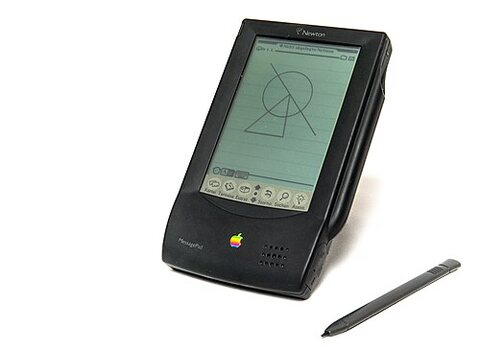 Apple Newton
The handheld that was right, ten years early
1993–1998
Apple Newton
The handheld that was right, ten years early
1993–1998
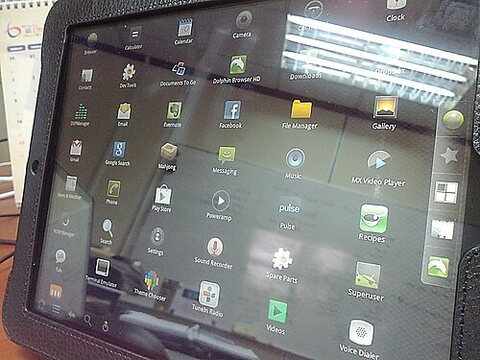 HP TouchPad
Killed 49 days after launch
2011–2011
HP TouchPad
Killed 49 days after launch
2011–2011
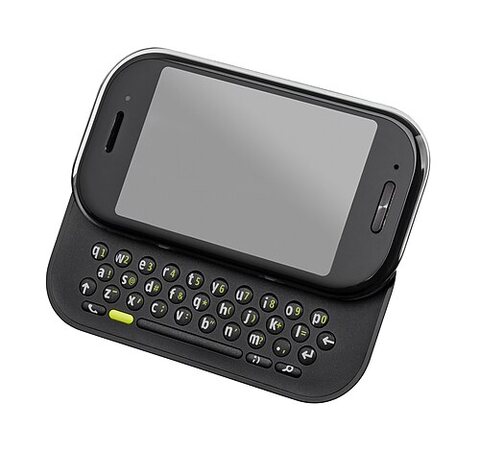 Microsoft Kin
Dead in 48 days
2010–2011
Microsoft Kin
Dead in 48 days
2010–2011
 Google Nexus
Android the way Google meant it, until Google wanted the whole phone
2010–2016
Google Nexus
Android the way Google meant it, until Google wanted the whole phone
2010–2016
 Amazon Fire Phone
Amazon's 3D phone, $199 in July, 99 cents by September, $170 million written off by October
2014–2015
Amazon Fire Phone
Amazon's 3D phone, $199 in July, 99 cents by September, $170 million written off by October
2014–2015
 Nokia Lumia
Nokia's bright Windows Phones, and the bet that took the company down with them
2011–2017
Nokia Lumia
Nokia's bright Windows Phones, and the bet that took the company down with them
2011–2017
Sources [edit]
- Palm Pre review, part 2: Synergy, phone, media, applications Engadget 4 June 2009 [archived]
- Maybe the Palm Pre isn't selling so well after all TechCrunch 6 July 2009 [archived]
- HP announces it will discontinue TouchPad, Pre phones, stop webOS device development The Next Web 18 August 2011 [archived]
- Pre to postmortem: the inside story of the death of Palm and webOS The Verge 5 June 2012 [archived]
- The Palm Pre launched 10 years ago today, here's what it meant to me The Verge 6 June 2019 [archived]
Last verified: 15 August 2026. Spotted an error? Suggest an edit (corrections with sources are reviewed and applied).