
T-Mobile Sidekick
The swivel-screen phone whose life lived on Danger's servers, and died with them
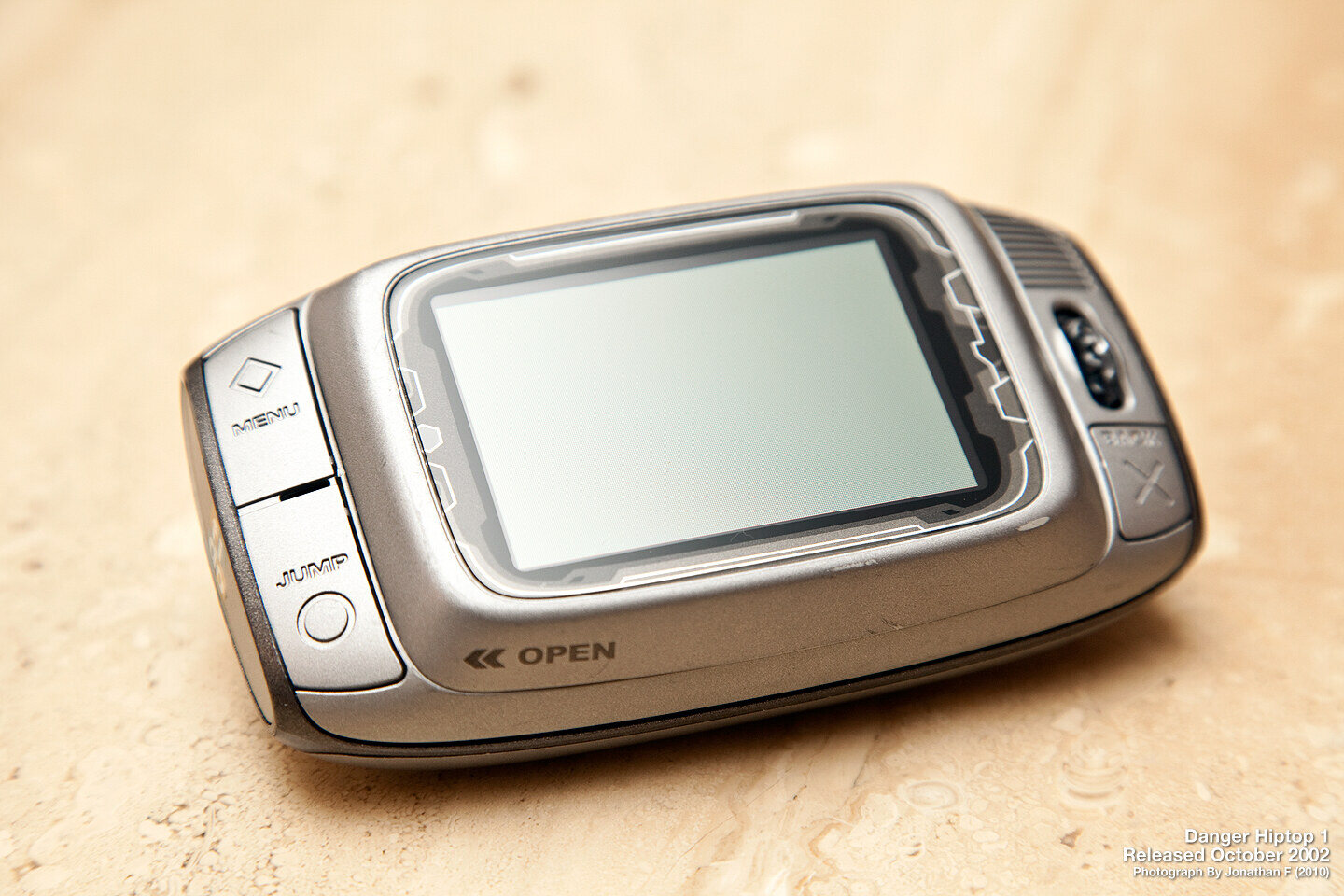
The T-Mobile Sidekick, built by Danger, Inc. as the Hiptop, was the messaging phone of the 2000s: a wide screen that swivelled up to reveal a full keyboard, unlimited data, AIM and email always on, and a following that ran from deaf users to hip-hop stars. Danger's cloud held everything. Microsoft bought the company in 2008, a server failure in 2009 lost customers' data for weeks, and on 31 May 2011 the service was shut down for good.
Timeline [edit]
- 2000
-
2000
Launch
Danger, Inc. is founded
Three ex-Apple and WebTV engineers set out to build a data phone for everyone.
- 2002
-
1 October 2002
Launch
The T-Mobile Sidekick goes on sale
Swivel screen, thumb keyboard, unlimited data.
- 2004
-
September 2004
Version
Sidekick II
A camera and a slimmer body; the model that made it a mainstream hit.
- 2005
-
February 2005
Incident
Paris Hilton's Sidekick is hacked
Her contact list leaks online. The phone becomes a celebrity fixture.
- 2007
-
December 2007
Peak
923,000 subscribers
Counted in Danger's IPO filing, almost all on T-Mobile.
- 2008
-
11 February 2008
Acquisition
Microsoft buys Danger
About $500 million. The team is put to work on what becomes the Kin.
- 2009
-
10 October 2009
Incident
The great Sidekick outage
A server failure loses customers' data for weeks.
- 2011
-
28 February 2011
Shutdown announced
T-Mobile announces the end
The Danger service will close on 31 May 2011.
-
31 May 2011
Shutdown
The servers go off
Every original Sidekick stops working.
How it looked [edit]
The site through time
Read the old front page here, in one piece, from our own capture: danger.com, 4 June 2004 →
Browse danger.com as it was, via the Internet Archive's Wayback Machine:
Ownership [edit]
Key figures [edit]
| Metric | Value | As of | Confidence |
|---|---|---|---|
| Registered accounts ▲ | 923,000 | December 2007 | Confirmed Subscribers on Danger devices per the company's December 2007 IPO prospectus |
Confirmed official figures · Reported media, cites a source · Estimated analyst or our estimate
Why it shut down [edit]
Official line: Microsoft bought Danger in February 2008 to build its own phones; that project became the Kin, which was killed after 48 days on sale in 2010. In October 2009 a server failure at Microsoft's Danger unit left Sidekick owners without their contacts and data for weeks. On 1 March 2011 T-Mobile announced that the Danger service behind every Sidekick would be switched off on 31 May 2011, and offered owners a move to an Android phone that only carried the name.
Our analysis: The Sidekick was a cloud phone before the term existed: mail, contacts, IM and apps all lived on Danger's servers and the handset was a thin, cheerful window onto them. That made it wonderful to use and completely dependent on a company Microsoft bought and then lost interest in. The 2009 outage showed what dependency meant, and the 2011 shutdown was just the same lesson delivered on purpose.
History [edit]
A phone built around a keyboard
Danger, Inc. was founded in Palo Alto in 2000 by Andy Rubin, Joe Britt and Matt Hershenson, three former Apple and WebTV engineers who wanted a data device for people, not executives. The Hiptop, sold by T-Mobile as the Sidekick from 1 October 2002, held its screen sideways; flick it and it swung 180 degrees on a hinge to reveal a thumb keyboard underneath. It came with an unlimited data plan at a time when data was billed by the kilobyte, and it did email, AOL Instant Messenger and web browsing better than any phone in America.
The design was cloud-first years before the phrase existed. Contacts, mail, notes and the app catalogue lived on Danger's servers and synced to the device; lose the phone and everything came back on the next one. Later models added a camera (Sidekick II, 2004), a trackball and MP3 player (Sidekick 3, 2006), and the wide-screen LX (2007 and 2009). Its fans were an unusual coalition: the deaf community, for whom always-on text was life-changing, teenagers, and celebrities, which is how Paris Hilton's stolen Sidekick contact list ended up online in 2005. Danger's regulatory filing at the end of 2007 counted 923,000 subscribers, nearly all on T-Mobile.
Microsoft
Danger had filed for an IPO when Microsoft bought it instead, on 11 February 2008, for a price reported at about $500 million. Andy Rubin had already left to found Android. Microsoft folded the team into a secret phone project, and the Sidekick was left to coast.
Then, in October 2009, a server failure at the Microsoft-owned Danger data centre took the service down and T-Mobile told customers their personal data had "almost certainly been lost". Most of it was eventually recovered, but the episode became the standard cautionary tale about cloud storage, and it happened to a phone whose whole point was that the cloud was safe. Microsoft's own product from the Danger team, the Kin, was unveiled in April 2010, went on sale in May and was cancelled after 48 days.
The end
On 28 February 2011 T-Mobile announced that the Danger service would be discontinued on 31 May 2011. Owners were offered a data export tool and a discount on the Sidekick 4G, a Samsung Android phone with the old name and none of the old software. At the end of May the servers went off and every original Sidekick became a keyboard attached to nothing.
The domain today
danger.com no longer answers. The Sidekick name was reused by T-Mobile for the unrelated Android phone in 2011 and then retired.
Similar projects
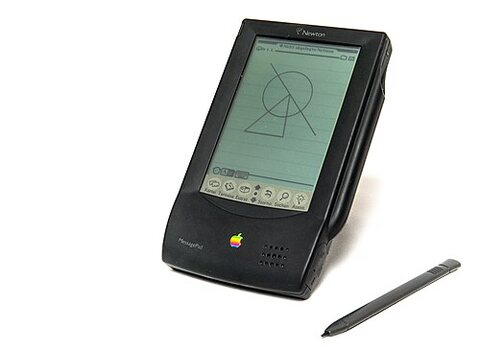 Apple Newton
The handheld that was right, ten years early
1993–1998
Apple Newton
The handheld that was right, ten years early
1993–1998
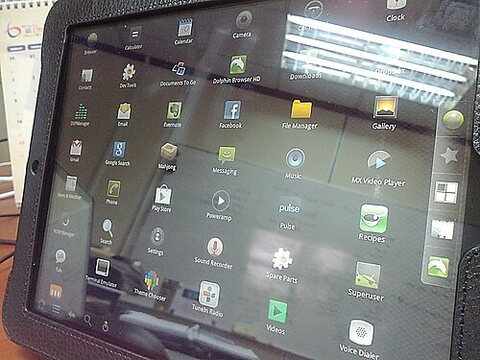 HP TouchPad
Killed 49 days after launch
2011–2011
HP TouchPad
Killed 49 days after launch
2011–2011
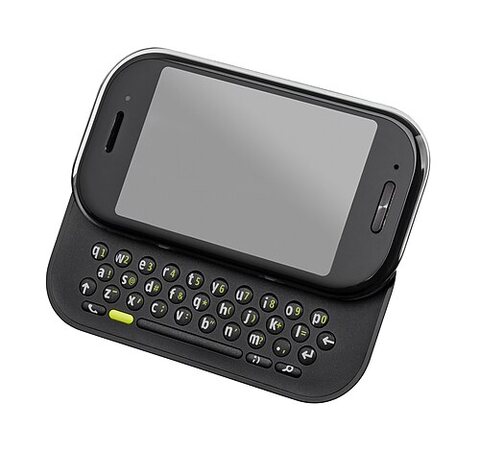 Microsoft Kin
Dead in 48 days
2010–2011
Microsoft Kin
Dead in 48 days
2010–2011
 Google Nexus
Android the way Google meant it, until Google wanted the whole phone
2010–2016
Google Nexus
Android the way Google meant it, until Google wanted the whole phone
2010–2016
 Amazon Fire Phone
Amazon's 3D phone, $199 in July, 99 cents by September, $170 million written off by October
2014–2015
Amazon Fire Phone
Amazon's 3D phone, $199 in July, 99 cents by September, $170 million written off by October
2014–2015
 Nokia Lumia
Nokia's bright Windows Phones, and the bet that took the company down with them
2011–2017
Nokia Lumia
Nokia's bright Windows Phones, and the bet that took the company down with them
2011–2017
Sources [edit]
- T-Mobile to launch Sidekick device ZDNet 30 September 2002 [archived]
- Meanwhile, Microsoft Buys Danger TechCrunch 11 February 2008 [archived]
- T-Mobile: we probably lost all your Sidekick data Engadget 10 October 2009 [archived]
- RIP, Danger, 2002-2011: Microsoft axing service on May 31st Engadget 1 March 2011 [archived]
Last verified: 15 August 2026. Spotted an error? Suggest an edit (corrections with sources are reviewed and applied).