
3DO Interactive Multiplayer
Trip Hawkins' $699 licensed console, built by Panasonic and Goldstar, out of the hardware business within three years
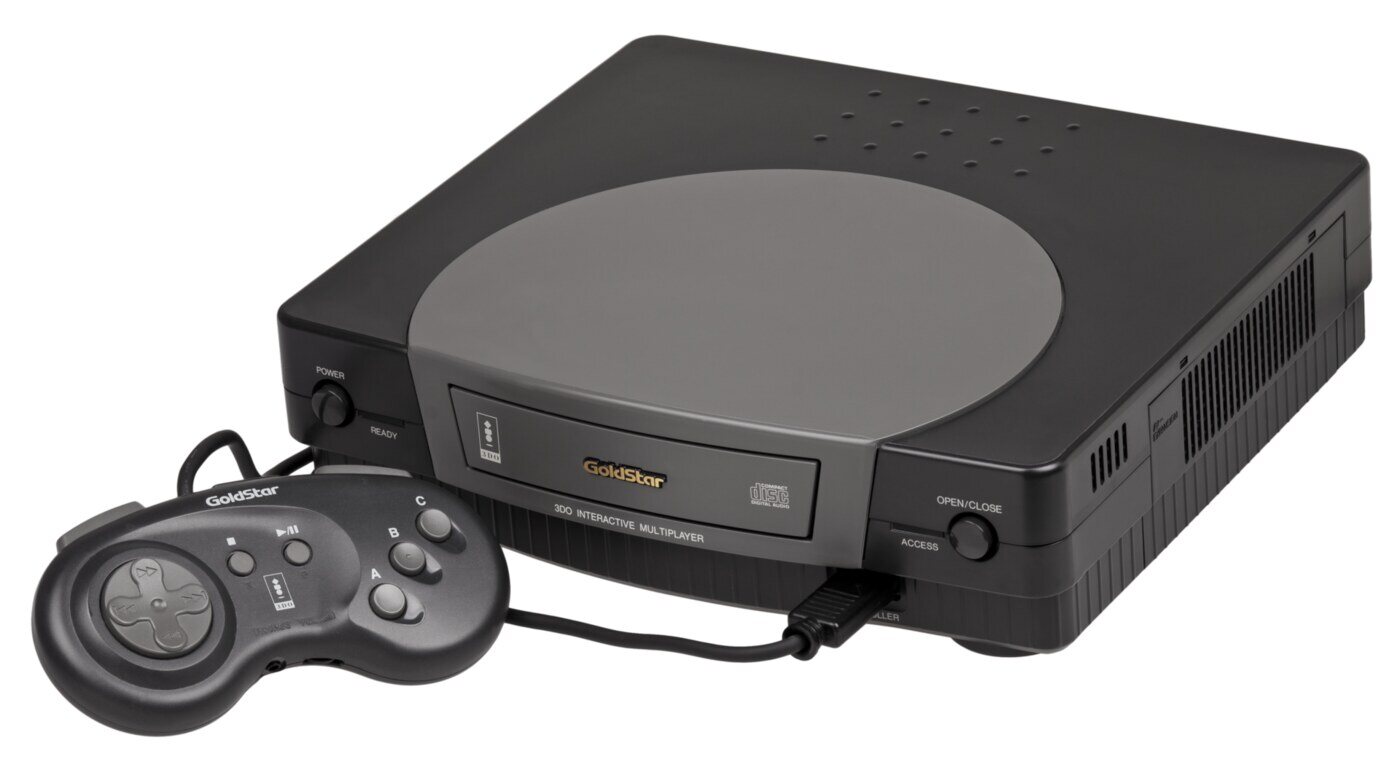
The 3DO Interactive Multiplayer was a 32-bit CD console specified by The 3DO Company, founded by Electronic Arts founder Trip Hawkins, and built under licence by Panasonic (the FZ-1 REAL, launched in the US on 4 October 1993 at $699), Goldstar and Sanyo. Its licensing model kept the price high, and after about two million sales 3DO sold its M2 successor to Matsushita and left hardware in 1996. The Panasonic FZ-1 is the machine most people mean by "3DO".
Timeline [edit]
- 1993
-
4 May 1993
other
3DO goes public
Before any hardware has shipped.
-
4 October 1993
Launch
Panasonic FZ-1 REAL launches in the US
$699.99 with Crash 'n Burn.
- 1994
-
20 March 1994
Launch
Launch in Japan
-
October 1994
other
Price cut to $399
Goldstar and Sanyo models arrive.
- 1995
-
December 1995
Shutdown announced
M2 rights sold to Matsushita
$100 million; 3DO to leave hardware.
- 1996
-
1996
Shutdown
Discontinued
About two million sold.
- 2003
-
28 May 2003
other
The 3DO Company files for bankruptcy
The software publisher that remained.
How it looked [edit]
The site through time
Browse 3do.com as it was, via the Internet Archive's Wayback Machine:
Ownership [edit]
Key figures [edit]
| Metric | Value | As of | Confidence |
|---|---|---|---|
| Downloads ▲ | 2 million | 1996 | Estimated Approximate lifetime sales across all licensed models |
Confirmed official figures · Reported media, cites a source · Estimated analyst or our estimate
Why it shut down [edit]
Official line: The 3DO Company sold the rights to its next console, the M2, to Matsushita for $100 million in a deal completed in early 1996 and left the hardware business to become a software publisher; the Interactive Multiplayer was discontinued the same year after about two million sales. Its $699 launch price, set by a licensing model in which 3DO earned only a $3 royalty per game and the manufacturers had to make their money on the hardware, kept it out of most homes until the PlayStation and Saturn arrived at half the price.
Our analysis: 3DO was a business model before it was a console: Trip Hawkins licensed a standard to Panasonic, Goldstar, Sanyo and others, took a small royalty, and expected the market to do the rest, the way VHS had. But VHS decks did not compete with a $299 PlayStation, and the manufacturers had no reason to sell hardware at a loss for someone else's platform. The machine had Road Rash, Need for Speed, Gex, Star Control II and Wing Commander III, real early-CD ambition, and no way to be cheap. Hawkins sold the future to Matsushita and got out.
History [edit]
A standard, not a console
Trip Hawkins left Electronic Arts in 1991 to found The 3DO Company with money from Matsushita, Time Warner, AT&T and MCA, and an idea borrowed from consumer electronics: 3DO would design a 32-bit CD-ROM console standard and license it to anyone who wanted to build one, taking a $3 royalty on each game rather than the $10 to $20 Nintendo and Sega charged. The hardware, designed by Amiga veterans Dave Needle and R. J. Mical, had an ARM60 processor, two custom video chips and a double-speed CD drive, and in early 1993 it was the most powerful games machine on the market. The company went public in May 1993 before a single unit had shipped.
Panasonic's FZ-1 REAL 3DO Interactive Multiplayer launched in the United States on 4 October 1993 at $699.99, with Crash 'n Burn in the box, and in Japan in March 1994. Goldstar and Sanyo models followed in 1994, and Creative sold a PC card version. The library grew to about 300 games and had genuine highlights: Road Rash, The Need for Speed (which started here), Gex, Star Control II, Wing Commander III, Return Fire, Super Street Fighter II Turbo, Alone in the Dark, and the FMV that every CD console of the era mistook for the future.
Sold to Matsushita
The price came down, to $499 and then $399 in 1994, but the manufacturers, earning nothing from software, could not chase Sony and Sega to $299 and below in 1995. 3DO had meanwhile designed the M2, a much faster successor, and in December 1995 agreed to sell its rights outright to Matsushita for $100 million; the deal closed in early 1996 and 3DO announced it was leaving hardware to publish software. Matsushita cancelled the M2 as a console in 1997. Roughly two million 3DO units had been sold. The 3DO Company survived as a publisher of Army Men and High Heat Baseball until it went bankrupt in 2003.
The domain today
3do.com no longer belongs to anything connected with the company.
Similar projects
 Ouya
The $99 console Kickstarter wanted to exist
2013–2019
Ouya
The $99 console Kickstarter wanted to exist
2013–2019
 PlayStation Vita
The best handheld nobody supported
2011–2019
PlayStation Vita
The best handheld nobody supported
2011–2019
 Sega Dreamcast
The console that killed its own company
1998–2001
Sega Dreamcast
The console that killed its own company
1998–2001
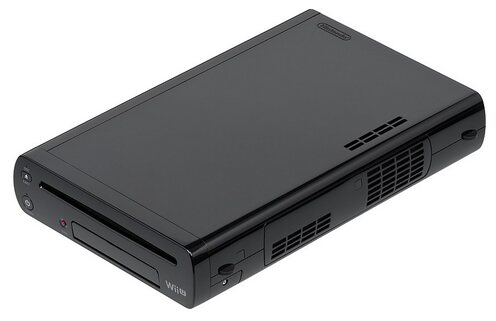 Wii U
13.5 million sold, and the ideas all survived it
2012–2024
Wii U
13.5 million sold, and the ideas all survived it
2012–2024
 PlayStation Portable
Sony's first handheld, 80 million sold, the UMD disc, the PSP Go that nobody bought, and a store that closed twice
2004–2014
PlayStation Portable
Sony's first handheld, 80 million sold, the UMD disc, the PSP Go that nobody bought, and a store that closed twice
2004–2014
 Game Gear
Sega's colour handheld, better than the Game Boy on paper and out of batteries in three hours
1990–1997
Game Gear
Sega's colour handheld, better than the Game Boy on paper and out of batteries in three hours
1990–1997
Sources [edit]
- Third time's a charm (they hope) Wired 1 January 1994 [archived]
- 3DO sales called pleasing The New York Times 20 November 1993 [archived]
- For 3DO, a make-or-break season The New York Times 11 December 1994 [archived]
- Chasing phantoms: the history of failed consoles GamesRadar 15 July 2013 [archived]
- 3DO history: Trip Hawkins' big bet on the model Tedium 20 April 2024 [archived]
- 3DO Interactive Multiplayer release date, specs and history Video Game Console Library 6 March 2026
Last verified: 16 August 2026. Spotted an error? Suggest an edit (corrections with sources are reviewed and applied).