
PlayStation Portable
Sony's first handheld, 80 million sold, the UMD disc, the PSP Go that nobody bought, and a store that closed twice
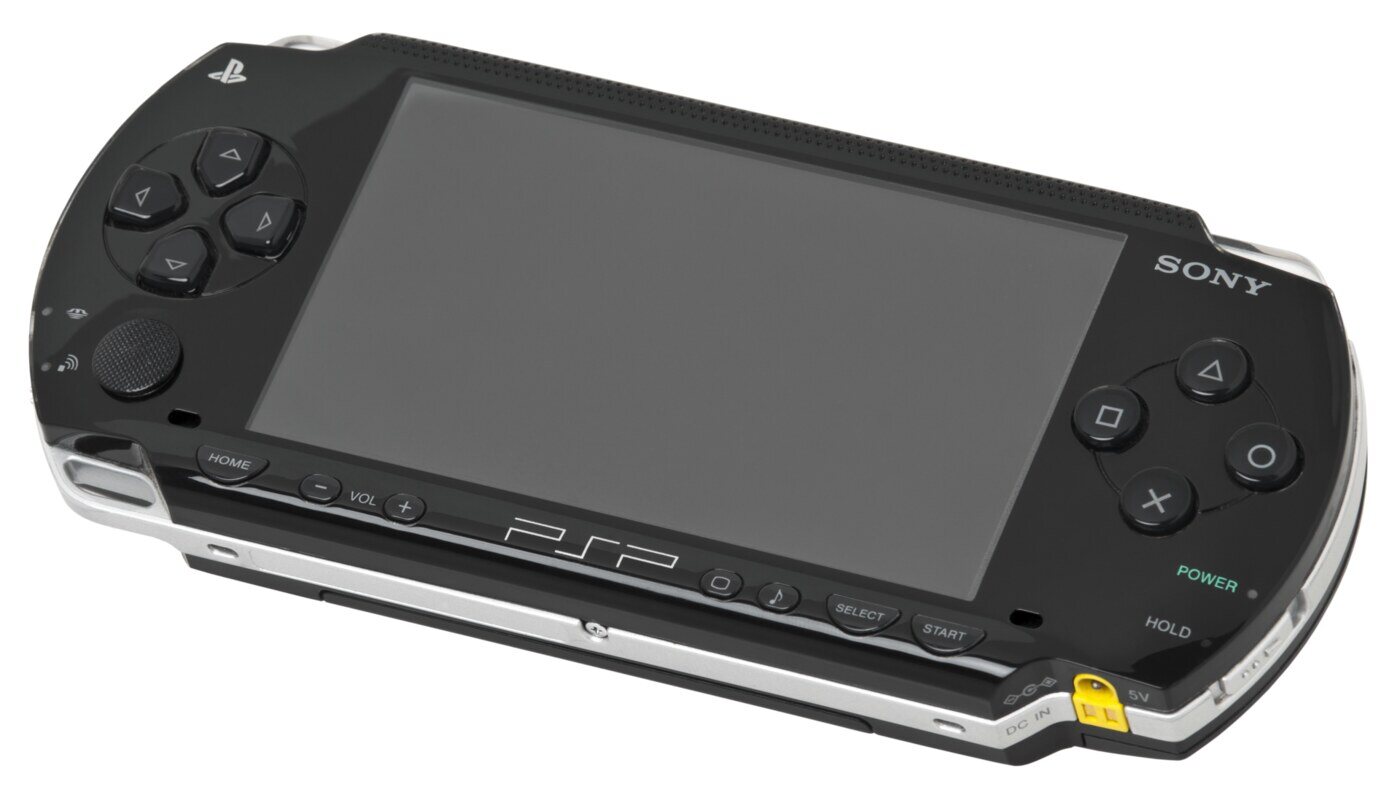
The PlayStation Portable was Sony's first handheld console, released in Japan on 12 December 2004 and in North America on 24 March 2005 with a 4.3-inch widescreen, Wi-Fi and games on the UMD optical disc. It went through the Slim (2007), the PSP-3000 (2008), the download-only PSP Go (2009) and the budget E1000 (2011), sold roughly 80 million units and was discontinued in Japan in June 2014. Its store closed to PSP hardware in 2016 and to purchases in 2021.
Timeline [edit]
- 2003
-
13 May 2003
other
PSP announced at E3
"The Walkman of the 21st century".
- 2004
-
12 December 2004
Launch
Launch in Japan
19,800 yen; sells out on day one.
- 2005
-
24 March 2005
Launch
Launch in North America
$249.99 with the UMD disc format.
-
1 September 2005
Launch
Launch in Europe
Record first-day sales.
- 2007
-
5 September 2007
Version
PSP-2000 Slim & Lite
Thinner, lighter, TV output.
- 2009
-
1 October 2009
Version
PSP Go
Download-only, $249; discontinued April 2011.
- 2011
-
17 December 2011
other
PlayStation Vita launches in Japan
The successor arrives.
- 2014
-
3 June 2014
Shutdown announced
Japanese shipments to end in June 2014
The rest of the world follows within a year.
-
June 2014
Shutdown
Production ends in Japan
About 80 million sold worldwide.
- 2016
-
31 March 2016
Shutdown
PlayStation Store closes on the PSP
Downloads still possible from a PC.
- 2021
-
2 July 2021
Shutdown
PSP store purchases end
PSP titles remain on the PS3 and Vita stores.
How it looked [edit]
The site through time
Read the old front page here, in one piece, from our own capture: playstation.com, 15 June 2006 →
Browse playstation.com as it was, via the Internet Archive's Wayback Machine:
Ownership [edit]
Key figures [edit]
| Metric | Value | As of | Confidence |
|---|---|---|---|
| Downloads ▲ | 80 million | June 2014 | Estimated Lifetime hardware sales, commonly cited as a little over 80 million |
Confirmed official figures · Reported media, cites a source · Estimated analyst or our estimate
Why it shut down [edit]
Official line: Sony said on 3 June 2014 that PSP shipments in Japan would end that month, nearly ten years after launch; North America and Europe followed by the end of 2014 and the rest of Asia in 2015. The PlayStation Vita had replaced it in December 2011. The PSP's built-in PlayStation Store was switched off on 31 March 2016, and on 2 July 2021 Sony ended purchases from the PSP store entirely, although PSP games could still be bought through the PS3 and Vita stores.
Our analysis: The PSP was not a failure; it sold around 80 million units and gave the DS a real fight, especially in Japan, where Monster Hunter turned it into the console of the late 2000s. It died of age and of the phone in everyone's pocket. The UMD, its proprietary disc, was the part that dated fastest, and the digital-only PSP Go of 2009, meant to solve that, was priced against a cheaper PSP that played the discs people already owned. When Sony finally replaced it the market for a dedicated handheld had shrunk to Nintendo's size.
History [edit]
A widescreen in your pocket
Sony announced the PSP at E3 in May 2003 as "the Walkman of the 21st century" and showed the hardware a year later: a 4.3-inch 480 by 272 widescreen, a MIPS processor, Wi-Fi, Memory Stick storage and the Universal Media Disc, a 1.8 GB optical disc in a plastic shell that carried games and, Sony hoped, films. It launched in Japan on 12 December 2004 at 19,800 yen and sold out; North America followed on 24 March 2005 at $249.99, Europe on 1 September 2005, where it set first-day records. Against the Nintendo DS it was the serious machine: Lumines, Ridge Racer, Wipeout Pure, GTA: Liberty City Stories, God of War: Chains of Olympus, and in Japan the Monster Hunter Portable games that made it a phenomenon.
It was also, from the first firmware, hacked. Homebrew and custom firmware ran on it within months, and Sony spent years in a firmware arms race that it lost. The PSP-2000 Slim & Lite of September 2007 was thinner with TV output; the PSP-3000 of October 2008 had a better screen and a microphone. On 1 October 2009 came the PSP Go, with no UMD drive, 16 GB of flash and a slide-out screen, at $249 when a disc-playing PSP-3000 was $169. It flopped, and Sony stopped making it in April 2011.
Vita, then the long tail
The PlayStation Vita, launched in Japan on 17 December 2011, was the successor, but the PSP did not go away: the cheap PSP-E1000 without Wi-Fi came to Europe in October 2011 and Japan kept buying the old machine for Monster Hunter. On 3 June 2014 Sony said Japanese shipments would end that month; the rest of the world followed by 2015. Lifetime sales are usually put at a little over 80 million.
The digital afterlife was untidy. On 31 March 2016 the PlayStation Store stopped working on the PSP itself, though owners could still buy from a PC and push downloads to the console. In March 2021 Sony announced the PS3, Vita and PSP stores would all close, reversed itself for the PS3 and Vita a month later, but ended PSP purchases on 2 July 2021 as planned. Most of the PSP library remains buyable through the other two stores, and the UMD discs still play.
The domain today
playstation.com no longer carries PSP product pages; the old PSP support pages redirect to the general PlayStation support site.
Similar projects
 Ouya
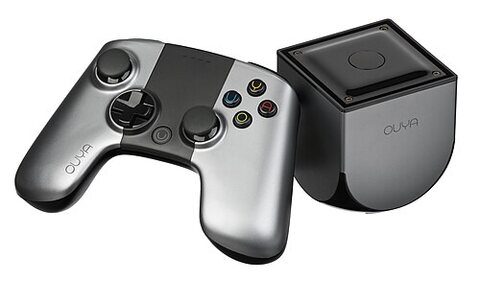
The $99 console Kickstarter wanted to exist
2013–2019
Ouya
The $99 console Kickstarter wanted to exist
2013–2019
 PlayStation Vita
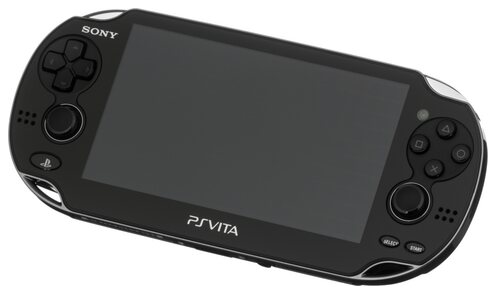
The best handheld nobody supported
2011–2019
PlayStation Vita
The best handheld nobody supported
2011–2019
 Sega Dreamcast
The console that killed its own company
1998–2001
Sega Dreamcast
The console that killed its own company
1998–2001
 Wii U
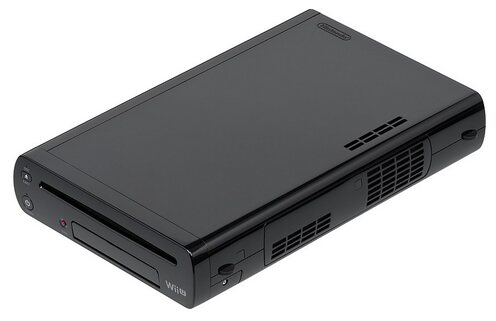
13.5 million sold, and the ideas all survived it
2012–2024
Wii U
13.5 million sold, and the ideas all survived it
2012–2024
 Game Gear
Sega's colour handheld, better than the Game Boy on paper and out of batteries in three hours
1990–1997
Game Gear
Sega's colour handheld, better than the Game Boy on paper and out of batteries in three hours
1990–1997
 Virtual Boy
Nintendo's red 3D headset, on sale for about a year
1995–1996
Virtual Boy
Nintendo's red 3D headset, on sale for about a year
1995–1996
Sources [edit]
- PSP specs revealed IGN 29 July 2003 [archived]
- The new look of mobile gaming The Guardian 14 May 2004
- iPSP IGN 23 December 2004 [archived]
- PSP European launch in September BBC News 25 April 2005 [archived]
- Sony's PSP breaks sales records BBC News 6 September 2005 [archived]
- Sony Japan confirms PSPgo death Eurogamer 20 April 2011 [archived]
- PSP discontinued in Japan just shy of its 10th birthday Engadget 3 June 2014 [archived]
- Sony to stop making PlayStation Portable CBC News 3 June 2014 [archived]
- Sony is shutting down the PSP PlayStation Store Game Informer 29 February 2016 [archived]
- PlayStation Store on PS3 and PS Vita will continue operations PlayStation Blog 19 April 2021 [archived]
- PSP release date, models and history Video Game Console Library 5 March 2026
Last verified: 16 August 2026. Spotted an error? Suggest an edit (corrections with sources are reviewed and applied).