Atari Jaguar
"Do the math": Atari's 64-bit console, the last one it ever made, dead within three years
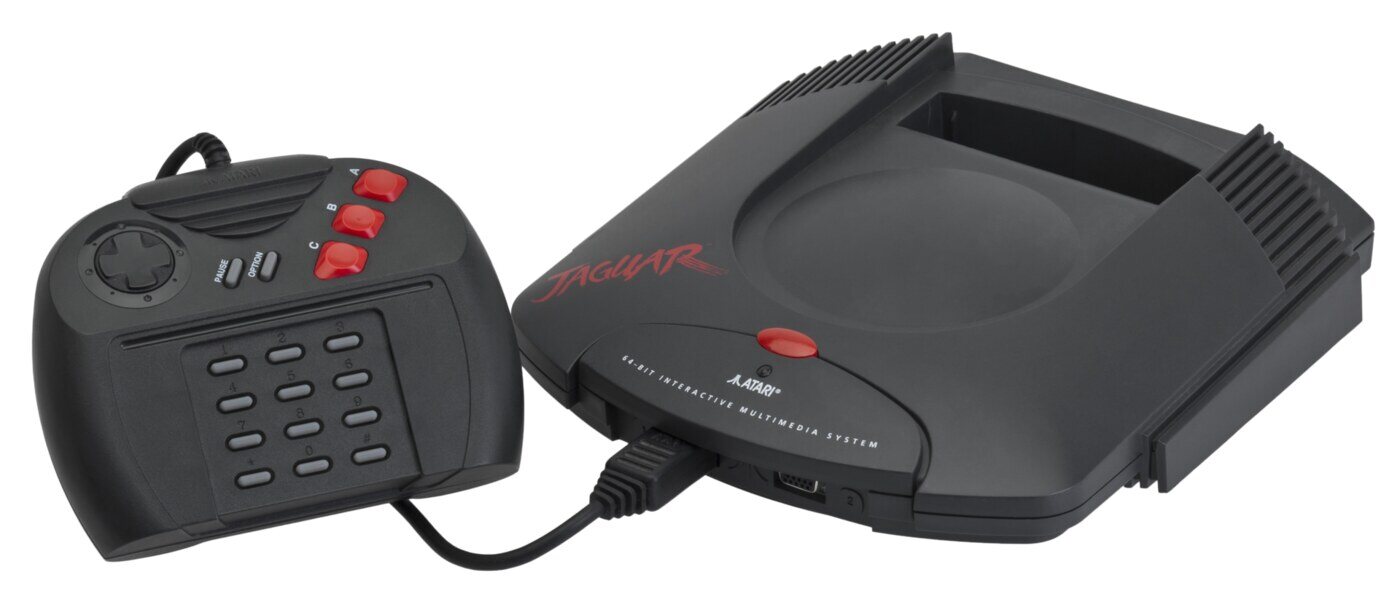
The Atari Jaguar was Atari Corporation's last console, launched in New York and San Francisco on 23 November 1993 at $249.99 and nationwide in 1994, and marketed as the first 64-bit games system. Manufactured by IBM, it had a small library led by Tempest 2000, Alien vs Predator and Doom, a CD add-on in 1995, and sales of well under 250,000. Atari merged into JTS in July 1996 and the Jaguar was discontinued; Hasbro released its patents in 1999.
Timeline [edit]
- 1993
-
28 June 1993
other
Jaguar announced, IBM to build it
A $500 million manufacturing deal.
-
23 November 1993
Launch
Launch in New York and San Francisco
$249.99; "Do the math".
- 1994
-
April 1994
Launch
Nationwide release
Tempest 2000 arrives that spring.
- 1995
-
21 September 1995
Version
Jaguar CD
$149 add-on with 13 games.
- 1996
-
13 February 1996
Shutdown announced
Atari agrees to merge with JTS
The console business is over.
-
30 July 1996
Shutdown
Merger closes; Jaguar discontinued
Atari Corporation ceases to exist.
- 1999
-
14 May 1999
Revival
Hasbro releases the patents
The Jaguar becomes an open platform for homebrew.
How it looked [edit]
The site through time
Browse atari.com as it was, via the Internet Archive's Wayback Machine:
Ownership [edit]
Key figures [edit]
| Metric | Value | As of | Confidence |
|---|---|---|---|
| Downloads ▲ | 250,000 | 30 July 1996 | Estimated Upper estimate of lifetime sales; some sources say under 150,000 |
Confirmed official figures · Reported media, cites a source · Estimated analyst or our estimate
Why it shut down [edit]
Official line: Atari Corporation, with Jaguar sales far below plan and cash running out, agreed in February 1996 to merge with the disk-drive maker JTS; the merger closed on 30 July 1996 and Atari ceased to exist as a console company, with the Jaguar discontinued and remaining stock sold off. Total sales are usually put at under 250,000 units. Hasbro Interactive bought the Atari properties in 1998 and on 14 May 1999 released the Jaguar's patents and rights, making it an open platform for homebrew developers.
Our analysis: The Jaguar was a real 1993 machine sold on a 1995 promise. Its "64-bit" claim came from adding up bus widths, its main CPU was a 1979 Motorola 68000, and its two custom chips were hard to program and shipped with bugs, so most games looked like better 16-bit titles. It arrived a year before the PlayStation and Saturn with almost no third-party support, and Atari, a shadow of the company that had invented the business, could not afford the games or the marketing to change that. Tempest 2000 and Alien vs Predator were not enough.
History [edit]
Do the math
Jack Tramiel's Atari Corporation, which had lost the 16-bit generation to Sega and Nintendo, bet what it had left on a leap. The Jaguar, designed by the British firm Flare Technology, was announced in June 1993 with IBM as its manufacturer and launched in New York and San Francisco on 23 November 1993 at $249.99, going nationwide in early 1994. The advertising slogan was "Do the math": 64 bits against the 16 of the Genesis and Super NES. The arithmetic added the widths of several buses; the two custom chips, Tom and Jerry, were 32-bit RISC processors and the general-purpose CPU was a Motorola 68000.
The good games were genuinely good: Jeff Minter's Tempest 2000, Alien vs Predator, Doom, Wolfenstein 3D, Iron Soldier, Rayman (which started life here). But there were few of them, third parties largely stayed away, and the hardware bugs that made the chips hard to program showed in a library of about 50 cartridge titles. The Jaguar CD add-on arrived in September 1995 at $149 with 13 games and a famously fragile drive. By then the PlayStation was out in America and the Saturn had been on sale for months.
Merged away
Atari cut the price to $149 in 1995 and it did not help. On 13 February 1996 the company announced a merger with JTS Corporation, a maker of hard drives, which closed on 30 July 1996; the Jaguar was discontinued and Atari Corporation ended, its name attached to a disk-drive company that soon failed. Hasbro Interactive bought the Atari brand and back catalogue in March 1998 and on 14 May 1999 declared the Jaguar an open platform, releasing its patents and encryption keys, which is why a small homebrew scene has produced new Jaguar cartridges ever since. The console's moulds had a second life too: a dental company used them for a camera housing.
The domain today
atari.com belongs to the current Atari SA, which sells the brand's classic games and the Atari VCS console; the Jaguar appears there only in retro compilations.
Similar projects
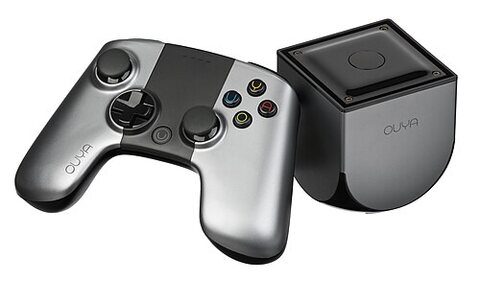 Ouya
The $99 console Kickstarter wanted to exist
2013–2019
Ouya
The $99 console Kickstarter wanted to exist
2013–2019
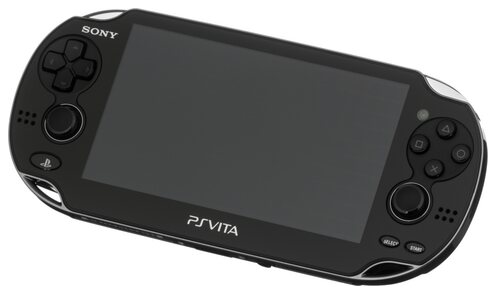 PlayStation Vita
The best handheld nobody supported
2011–2019
PlayStation Vita
The best handheld nobody supported
2011–2019
 Sega Dreamcast
The console that killed its own company
1998–2001
Sega Dreamcast
The console that killed its own company
1998–2001
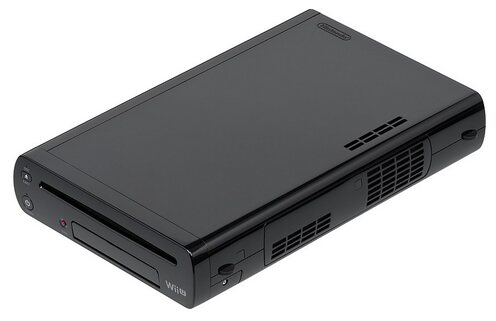 Wii U
13.5 million sold, and the ideas all survived it
2012–2024
Wii U
13.5 million sold, and the ideas all survived it
2012–2024
 PlayStation Portable
Sony's first handheld, 80 million sold, the UMD disc, the PSP Go that nobody bought, and a store that closed twice
2004–2014
PlayStation Portable
Sony's first handheld, 80 million sold, the UMD disc, the PSP Go that nobody bought, and a store that closed twice
2004–2014
 Game Gear
Sega's colour handheld, better than the Game Boy on paper and out of batteries in three hours
1990–1997
Game Gear
Sega's colour handheld, better than the Game Boy on paper and out of batteries in three hours
1990–1997
Sources [edit]
- IBM to manufacture new Atari entertainment system The New York Times 29 June 1993 [archived]
- Atari Jaguar release date, specs and history Video Game Console Library 6 March 2026 [archived]
- Atari Corp. Form 10-Q, 1996 U.S. Securities and Exchange Commission 20 May 1996
- Atari goes to Hasbro GameSpot 16 March 1998 [archived]
- Ultimate Guide: Atari Jaguar - The Death Rattle Of A Pioneer Time Extension 11 August 2022 [archived]
- 30 years ago, one video game system hopelessly failed kids everywhere Fatherly 24 November 2023 [archived]
Last verified: 16 August 2026. Spotted an error? Suggest an edit (corrections with sources are reviewed and applied).