Game Gear
Sega's colour handheld, better than the Game Boy on paper and out of batteries in three hours
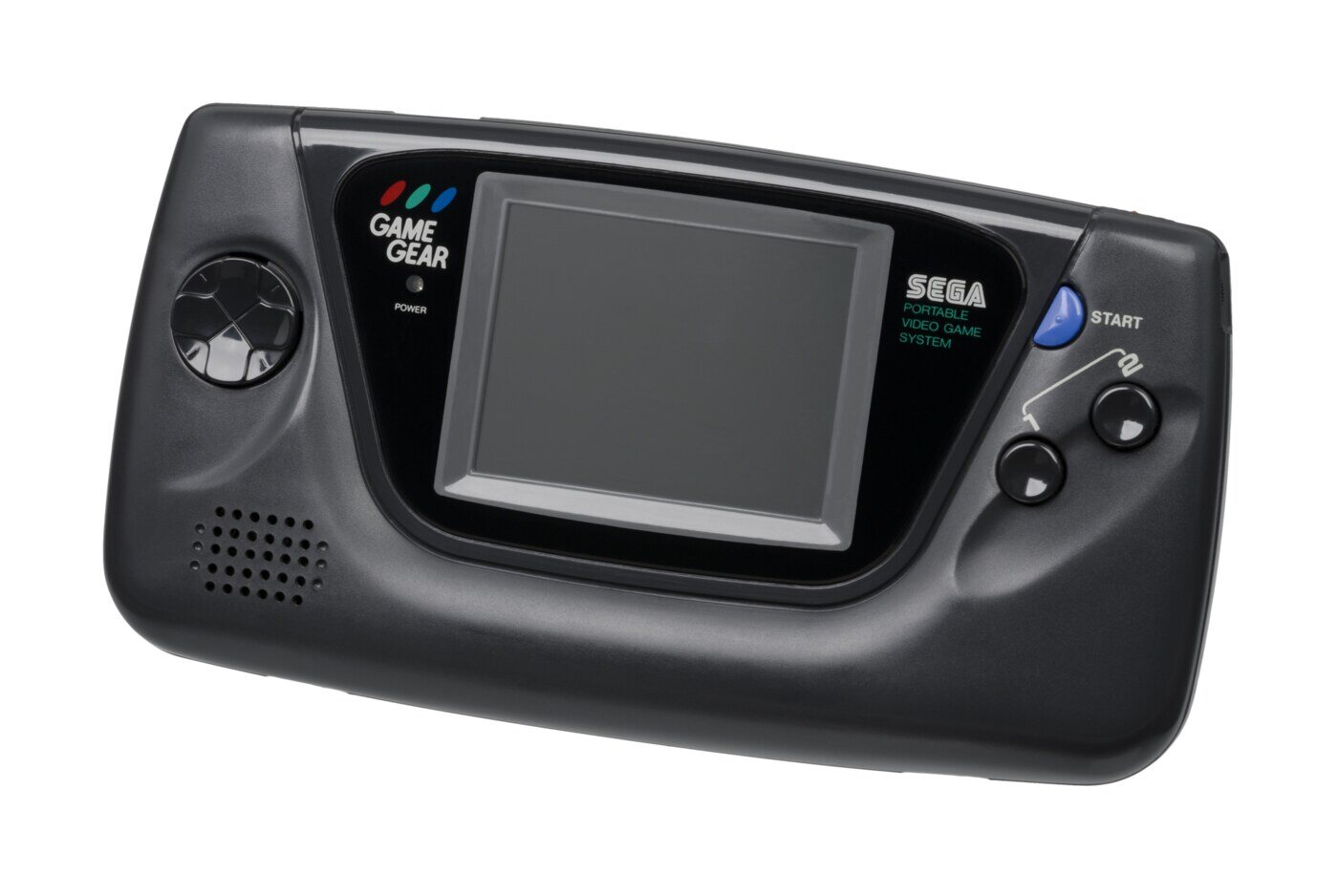
The Game Gear was Sega's handheld console, released in Japan on 6 October 1990 and in North America and Europe in 1991 as a colour, backlit rival to the Game Boy. Built on Master System hardware, it had a TV tuner accessory and games such as Sonic the Hedgehog, Shinobi and Columns, but its battery life and price kept it far behind Nintendo. It sold about 10.6 million units before Sega ended support in 1997; Majesco reissued it in 2000.
Timeline [edit]
- 1990
-
6 October 1990
Launch
Launch in Japan
19,800 yen; a backlit colour Master System.
- 1991
-
26 April 1991
Launch
Launch in North America
$149.99, TV tuner accessory.
-
June 1991
Launch
Launch in Europe
- 1996
-
31 December 1996
Peak
10.62 million sold
The last published lifetime figure.
- 1997
-
1997
Shutdown
Sega ends support
The Game Boy Pocket and Pokemon arrive the same year.
- 2000
-
2000
Revival
Majesco reissue
$29.99 budget hardware.
- 2020
-
6 October 2020
Revival
Game Gear Micro
Four tiny consoles for the 30th anniversary.
How it looked [edit]
The site through time
Browse sega.com as it was, via the Internet Archive's Wayback Machine:
Ownership [edit]
Key figures [edit]
| Metric | Value | As of | Confidence |
|---|---|---|---|
| Downloads ▲ | 10.6 million | 31 December 1996 | Reported Lifetime hardware sales worldwide by the end of 1996 |
Confirmed official figures · Reported media, cites a source · Estimated analyst or our estimate
Why it shut down [edit]
Official line: Sega stopped supporting the Game Gear in 1997, having sold about 10.6 million against the Game Boy's tens of millions. The console was a Master System in a portable shell with a backlit colour screen, and the screen was the problem: six AA batteries lasted three to five hours, and it was bulky and expensive next to Nintendo's monochrome machine. Majesco reissued it cheaply in 2000, and Sega has since sold its games on the 3DS Virtual Console and in the 2020 Game Gear Micro.
Our analysis: The Game Gear made the case that specifications do not sell handhelds. It was a better machine than the Game Boy in every measurable way, and it lost by more than five to one because the Game Boy ran for thirty hours on four batteries, cost less and had Tetris and Pokemon. Sega also never gave it a dedicated team; most of its library was Master System ports. It remains a well-loved failure, and the fault everyone remembers is the capacitors, which have leaked in nearly every surviving unit.
History [edit]
A Master System with a screen
Sega answered the Game Boy with the Game Gear, launched in Japan on 6 October 1990 at 19,800 yen and in North America in April 1991 at $149.99, Europe following that year. It was essentially a Master System with a 3.2-inch backlit colour LCD, 4,096 colours on the palette and 32 on screen, a landscape shape and a headphone socket, and Sega sold a TV tuner that turned it into a pocket television. Codenamed Project Mercury, it looked like the future next to Nintendo's green-grey screen.
It played well: Sonic the Hedgehog, Sonic 2, Shinobi, Columns, Defenders of Oasis, Shining Force Gaiden, and, in the later years, some of the best versions of Sega's arcade games. The catch was the batteries. Six AAs gave three to five hours; the Game Boy gave up to thirty on four. The Game Gear was also bigger, cost more and had a smaller library, much of it straight Master System ports. In Japan, where the Master System had never mattered, it barely registered.
Fading out
Sega's attention went to the Genesis, then to the Sega CD, 32X and Saturn, and the Game Gear was left to run down. It sold about 10.62 million worldwide by the end of 1996 and Sega ended support in 1997, the year the Game Boy Pocket and Pokemon reset the whole handheld market. Majesco licensed the hardware and reissued it in 2000 at $29.99 with a small run of games. Sega put dozens of Game Gear titles on the 3DS Virtual Console from 2012, and on 6 October 2020, for its 60th birthday, released the Game Gear Micro, four tiny consoles with four games each, complete with an optional magnifying glass.
The domain today
sega.com is Sega's corporate site.
Similar projects
 Ouya
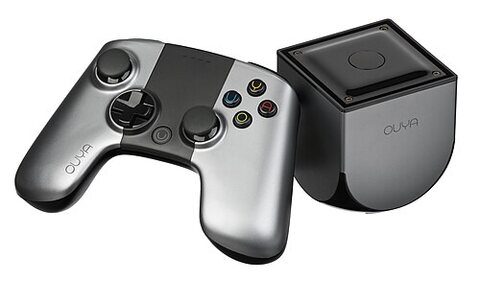
The $99 console Kickstarter wanted to exist
2013–2019
Ouya
The $99 console Kickstarter wanted to exist
2013–2019
 PlayStation Vita
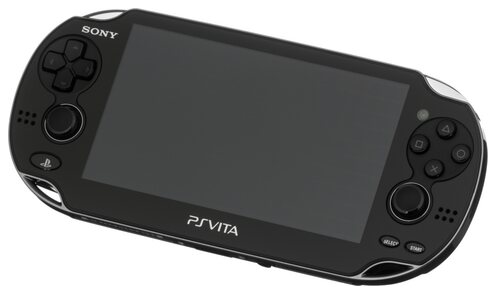
The best handheld nobody supported
2011–2019
PlayStation Vita
The best handheld nobody supported
2011–2019
 Sega Dreamcast
The console that killed its own company
1998–2001
Sega Dreamcast
The console that killed its own company
1998–2001
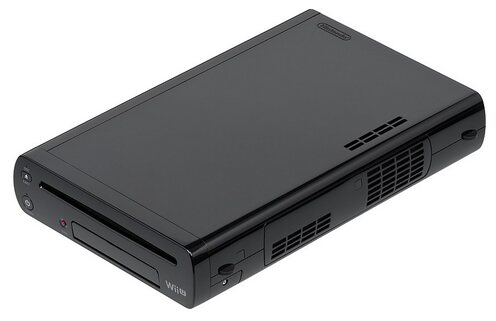 Wii U
13.5 million sold, and the ideas all survived it
2012–2024
Wii U
13.5 million sold, and the ideas all survived it
2012–2024
 PlayStation Portable
Sony's first handheld, 80 million sold, the UMD disc, the PSP Go that nobody bought, and a store that closed twice
2004–2014
PlayStation Portable
Sony's first handheld, 80 million sold, the UMD disc, the PSP Go that nobody bought, and a store that closed twice
2004–2014
 Virtual Boy
Nintendo's red 3D headset, on sale for about a year
1995–1996
Virtual Boy
Nintendo's red 3D headset, on sale for about a year
1995–1996
Sources [edit]
- IGN presents the history of Sega IGN 21 April 2009
- Did the Game Gear bring down Sega? MEL Magazine 10 May 2022
- Best Sega Game Gear games of all time GamesRadar 6 March 2014
- Game Gear emulation outclasses the other 3DS Virtual Console games Engadget 14 March 2012 [archived]
- 3DS eShop: Zelda sale and tons of Game Gear games IGN 17 May 2013 [archived]
- Sega's Game Gear Micro is four $50 consoles with four games each The Verge 3 June 2020 [archived]
Last verified: 16 August 2026. Spotted an error? Suggest an edit (corrections with sources are reviewed and applied).