Palm OS
The organiser in your pocket that taught phones to be computers
Palm OS ran the PalmPilot and its descendants, the devices that made carrying a computer in your pocket normal years before the smartphone. Launched with the Pilot 1000 in 1996, it dominated the PDA era, survived corporate splits and a sale to ACCESS, and was finally retired by Palm itself on 11 February 2009 in favour of webOS.
Timeline [edit]
- 1996
-
March 1996
Launch
The Pilot 1000 ships
Four apps, Graffiti, HotSync. Pocket computing becomes normal.
- 1997
-
10 March 1997
Version
The PalmPilot and Palm OS 2.0
TCP/IP arrives. The name enters the language.
- 1999
-
1999
Peak
The PDA market belongs to Palm
Palm V, Handspring Visor and Sony CLIE all run Palm OS.
- 2003
-
28 October 2003
Feature
PalmSource is spun off
The OS and the hardware company go separate ways.
- 2005
-
14 November 2005
Acquisition
ACCESS buys PalmSource
$324 million for the operating system, renamed Garnet.
- 2007
-
14 October 2007
Version
The Centro, the last new Palm OS phone
A $99 smartphone closes the line that the Pilot opened.
- 2009
-
8 January 2009
Decline
webOS is announced
Palm's answer to the iPhone shares nothing with Palm OS.
-
11 February 2009
Shutdown
No more Palm OS devices
Chief executive Ed Colligan retires the platform.
How it looked [edit]
The site through time
Read the old front page here, in one piece, from our own capture: palm.com, 1 June 2002 →
Browse palm.com as it was, via the Internet Archive's Wayback Machine:
Ownership [edit]
Why it shut down [edit]
Official line: On 11 February 2009 Palm chief executive Ed Colligan told investors there would be no more Palm OS devices; the Centro was the last. Palm had just unveiled webOS, built from scratch, because the 1996-era foundations of Palm OS could not carry a modern smartphone.
Our analysis: Palm OS was engineered brilliantly for 1996: instant response on tiny batteries and slow chips, by doing one thing at a time. Those same constraints, no real multitasking and an architecture from the PDA era, became unfixable once the iPhone raised what a pocket computer had to be. Its own maker replaced it rather than modernise it.
History [edit]
Graffiti and one button press
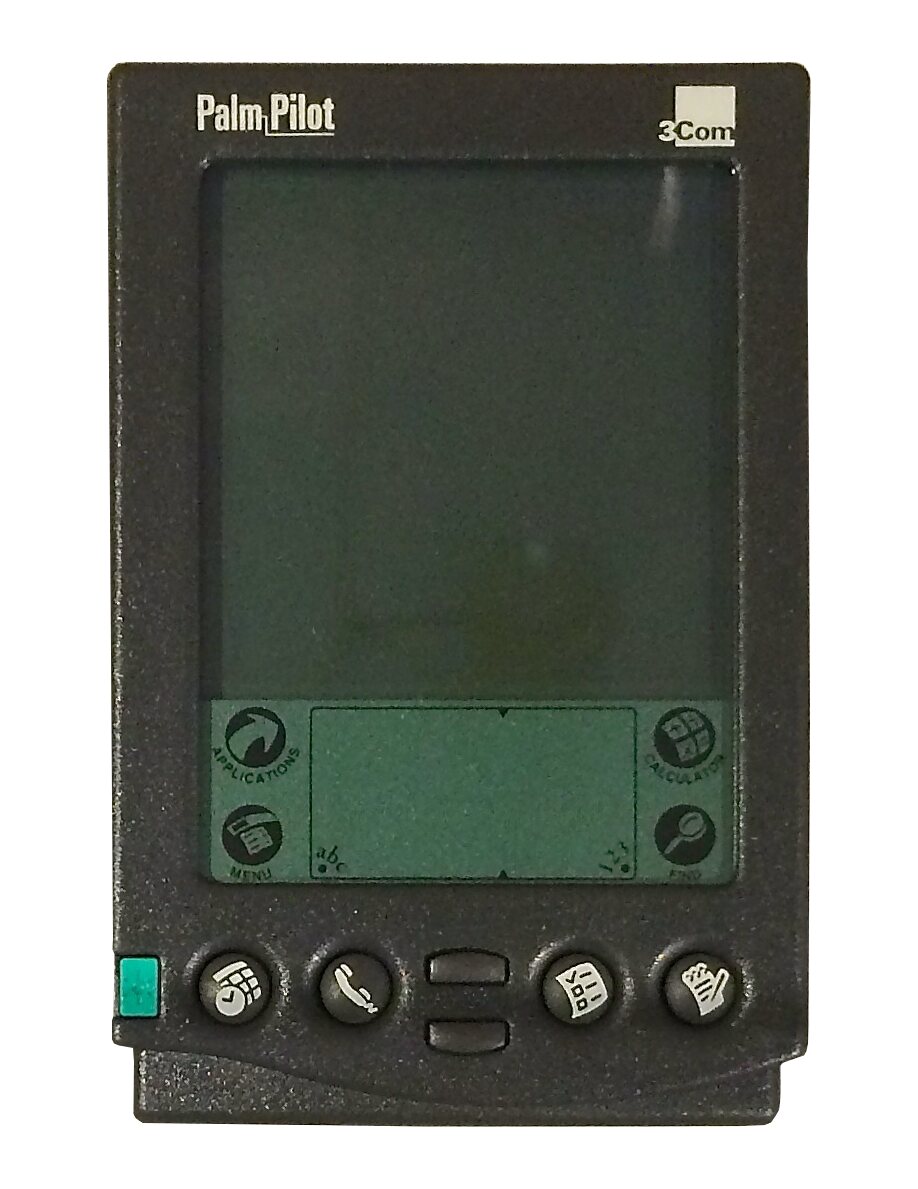
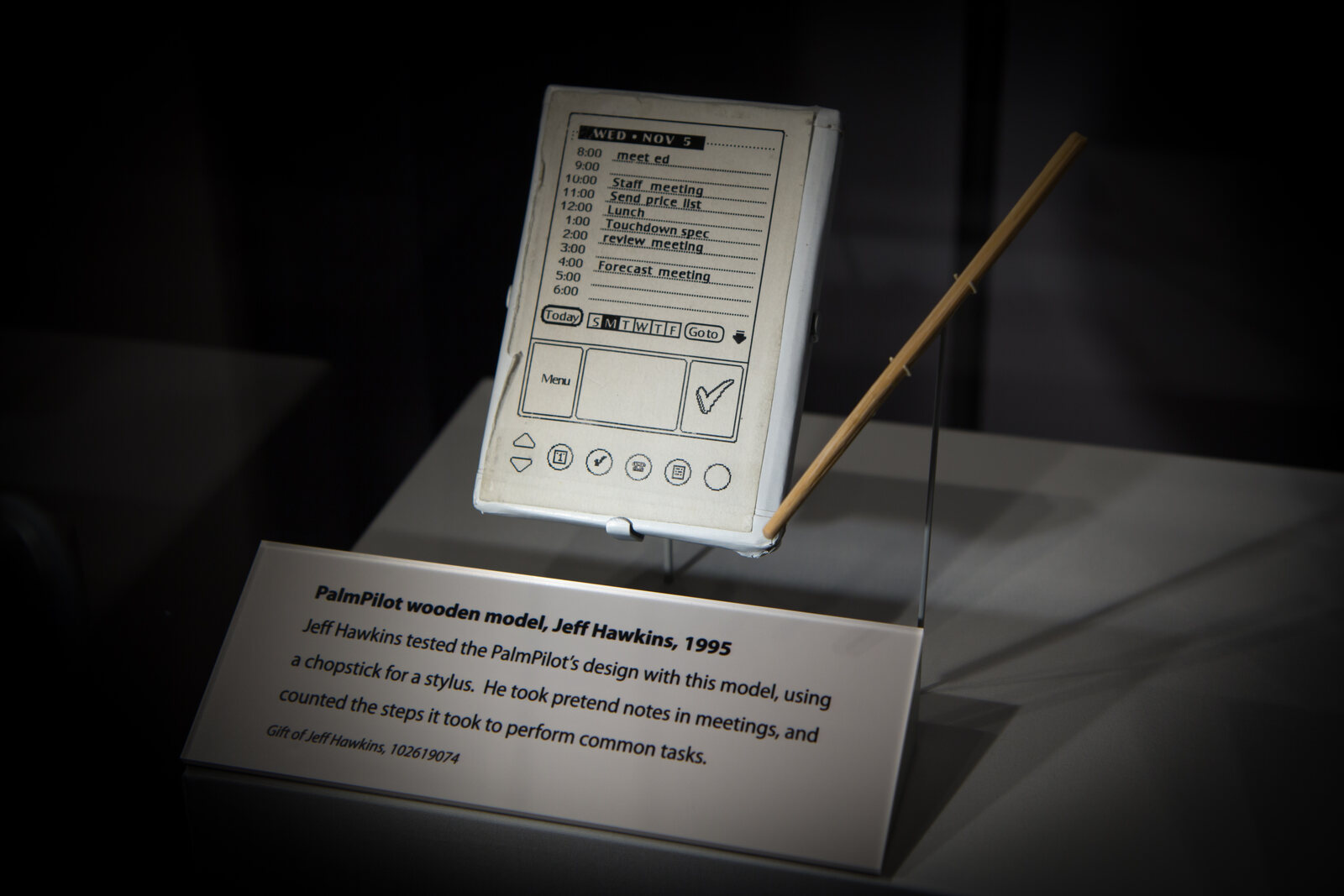
Jeff Hawkins designed Palm OS around a discipline nobody had asked for: everything the device does should be reachable in one or two taps, and it should respond instantly. The Pilot 1000 and 5000 shipped in March 1996 with four applications, Address, Date Book, Memo Pad and To Do List, a stylus, and Graffiti, the shorthand alphabet users learned so the machine would not have to learn handwriting.
It worked because of what it refused to do. One application ran at a time. There was no file system to browse. Synchronising with the PC was one button, HotSync, and it worked. Against Microsoft's Windows CE devices, which tried to shrink a desktop into a handheld, the PalmPilot felt effortless, and Palm OS took the overwhelming share of the PDA market: Palm V, Handspring Visor, Sony CLIE, the Kyocera and Treo smartphones later on.
Splits and spin-offs
The corporate history was messier than the product. Palm was bought by US Robotics, then 3Com; Hawkins left to found Handspring, which built Palm OS devices that outclassed Palm's own, then merged back. In 2003 the operating system was spun off into a separate company, PalmSource, which the Japanese firm ACCESS bought in 2005. Palm the hardware company ended up licensing back, and eventually buying rights to, the system it had created, which by then had been renamed Garnet OS.
Through all of it the OS itself barely moved. Palm OS 5 arrived in 2002; the long-promised modern successor, Cobalt, was finished but never shipped on a single device, because no manufacturer wanted it.
Retired by its own maker
The iPhone made the old discipline look like the limitation it had become. Palm's answer, webOS, was announced at CES in January 2009 and shared nothing with Palm OS but the logo. On 11 February 2009 chief executive Ed Colligan confirmed the other half of that decision: no more Palm OS products, ever. The Centro, a $99 smartphone from 2007, was the last of a line that began with the Pilot.
The ideas outlived the code. Instant-on, sync as a first-class feature, an interface built for fingers-on-glass economy rather than desktop metaphors: every phone works that way now.
The domain today
palm.com now belongs to an unrelated venture selling a credit-card-sized "Palm phone" under licence. The company that built Palm OS is long gone; its hardware sibling died inside HP after the webOS years, a story told in the HP TouchPad entry here.
Similar projects
 BlackBerry OS
The keyboard that ran the world
1999–2022
BlackBerry OS
The keyboard that ran the world
1999–2022
 Windows Phone
The tiles nobody wrote apps for
2010–2019
Windows Phone
The tiles nobody wrote apps for
2010–2019
 Windows RT
Windows for ARM tablets that could not run Windows programs
2012–2023
Windows RT
Windows for ARM tablets that could not run Windows programs
2012–2023
 Symbian
Ran most of the world's smartphones, then burned with the platform
1998–2014
Symbian
Ran most of the world's smartphones, then burned with the platform
1998–2014
 Windows Mobile
A tiny Windows with a Start button, reset to zero by its own maker
2000–2012
Windows Mobile
A tiny Windows with a Start button, reset to zero by its own maker
2000–2012
 BlackBerry 10
The reboot that arrived in 2013 and was switched off in 2022
2013–2022
BlackBerry 10
The reboot that arrived in 2013 and was switched off in 2022
2013–2022
Sources [edit]
- Colligan: no more Palm OS based products Palm Infocenter 11 February 2009 [archived]
- Plug pulled on Palm OS, webOS is king TechRadar 12 February 2009 [archived]
- Pre to postmortem: the inside story of Palm The Verge 5 June 2012 [archived]
Last verified: 14 August 2026. Spotted an error? Suggest an edit (corrections with sources are reviewed and applied).