MeeGo
Nokia and Intel's Linux phone, abandoned the year its best device shipped
MeeGo was the Linux-based mobile operating system Nokia and Intel announced on 15 February 2010, merging Nokia's Maemo and Intel's Moblin under the Linux Foundation for phones, netbooks, tablets and cars. Nokia abandoned it for Windows Phone in February 2011, then shipped the MeeGo-based Nokia N9 in September 2011 to admiring reviews; Intel and Samsung folded the project into Tizen that month. The last release was in July 2012, and its forks became Sailfish OS.
Timeline [edit]
- 2010
-
15 February 2010
Launch
MeeGo is announced
Maemo and Moblin merge at Mobile World Congress.
-
26 May 2010
Version
MeeGo 1.0
The netbook release.
- 2011
-
11 February 2011
Decline
Nokia chooses Windows Phone
MeeGo is demoted to a one-device experiment.
-
21 June 2011
Feature
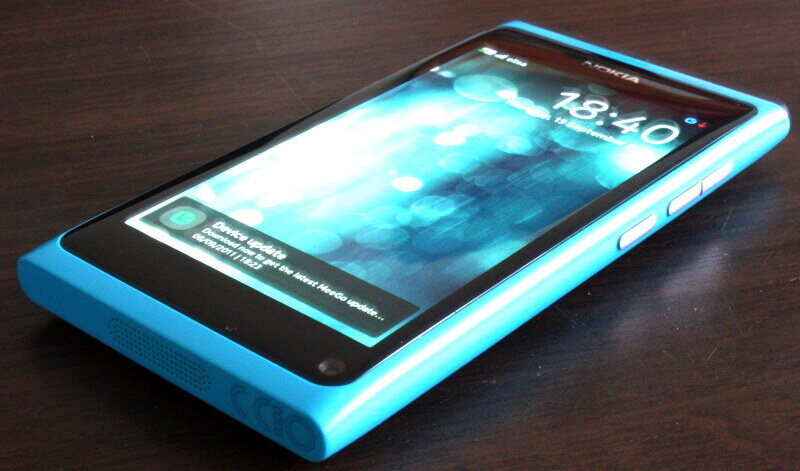
The Nokia N9
The best-reviewed Nokia in years, with no successor promised.
-
27 September 2011
Shutdown announced
Tizen
Intel and Samsung fold MeeGo into a new Linux Foundation project.
- 2012
-
12 July 2012
Shutdown
The last MeeGo release
1.2 update; the Mer fork carries on toward Sailfish.
How it looked [edit]
The site through time
Read the old front page here, in one piece, from our own capture: meego.com, 5 July 2011 →
Browse meego.com as it was, via the Internet Archive's Wayback Machine:
Ownership [edit]
Why it shut down [edit]
Official line: On 11 February 2011, months before the first MeeGo phone shipped, Nokia announced it would build its smartphones on Windows Phone and treat MeeGo as an experiment. Intel carried on alone until 27 September 2011, when it and Samsung folded MeeGo into a new Linux Foundation project, Tizen. The last MeeGo release came out in July 2012, and the Nokia N9, the one flagship phone to run it, was sold for a year with no successor.
Our analysis: MeeGo is the operating system whose only phone got the reviews Nokia had wanted for years, after Nokia had already decided to kill it. Elop's Windows bet needed a clean break, and a rival platform inside the company, however good, was a problem rather than an asset. Intel had no phones and Samsung wanted its own thing, so the code lived on as Tizen and, through the Mer fork, as Sailfish; the name did not.
History [edit]
Maemo plus Moblin
At Mobile World Congress on 15 February 2010, Nokia and Intel announced they were merging their Linux platforms, Nokia's Maemo, which had run its N900 phone and internet tablets, and Intel's Moblin for netbooks, into MeeGo, hosted by the Linux Foundation and meant for phones, netbooks, tablets, TVs and car dashboards. Version 1.0 for netbooks arrived in May 2010, AMD and a run of carmakers signed on, and Nokia's roadmap had MeeGo as the future of its high-end phones, with Symbian below it.
The burning platform
Then Nokia's new chief executive Stephen Elop, in his "burning platform" memo and the announcement of 11 February 2011, chose Windows Phone instead. MeeGo, he said, would ship in one device that year as a learning exercise. The MeeGo team, seeing which way things went, kept building anyway, and the result, the Nokia N9, announced on 21 June 2011 and shipped that September, was the best-received Nokia in years: a single slab of coloured polycarbonate with no buttons on the front, a swipe interface a decade ahead of the industry, and an operating system that reviewers found fast and elegant. It was sold in a handful of markets and never in the United States or Britain, and Nokia said plainly there would be no successor. Its body became the Lumia 800, with Windows inside.
Tizen
Intel, left without a phone partner, announced with Samsung and the Linux Foundation on 27 September 2011 that MeeGo would be superseded by Tizen, a new project built partly on its code. A final MeeGo 1.2 update shipped in July 2012, and the community fork Mer, started when the announcement came, became the base of Jolla's Sailfish OS, built by ex-Nokia MeeGo staff, which is still shipping. Tizen itself ended up on Samsung televisions and watches. Nokia sold its phone business to Microsoft in 2013.
The domain today
meego.com was retired after the Tizen transition and no longer resolves; the last copies of the site live in the Wayback Machine.
Similar projects
 BlackBerry OS
The keyboard that ran the world
1999–2022
BlackBerry OS
The keyboard that ran the world
1999–2022
 Windows Phone
The tiles nobody wrote apps for
2010–2019
Windows Phone
The tiles nobody wrote apps for
2010–2019
 Windows RT
Windows for ARM tablets that could not run Windows programs
2012–2023
Windows RT
Windows for ARM tablets that could not run Windows programs
2012–2023
 Symbian
Ran most of the world's smartphones, then burned with the platform
1998–2014
Symbian
Ran most of the world's smartphones, then burned with the platform
1998–2014
 Palm OS
The organiser in your pocket that taught phones to be computers
1996–2009
Palm OS
The organiser in your pocket that taught phones to be computers
1996–2009
 Windows Mobile
A tiny Windows with a Start button, reset to zero by its own maker
2000–2012
Windows Mobile
A tiny Windows with a Start button, reset to zero by its own maker
2000–2012
Sources [edit]
- MeeGo: Nokia and Intel merge Maemo and Moblin Engadget 15 February 2010 [archived]
- Nokia and Microsoft form partnership BBC News 11 February 2011 [archived]
- Nokia's N9 official: a luscious slab of MeeGo coming later this year Engadget 21 June 2011 [archived]
- MeeGo to be folded into Linux-based Tizen OS Engadget 28 September 2011 [archived]
Last verified: 15 August 2026. Spotted an error? Suggest an edit (corrections with sources are reviewed and applied).