
Windows RT
Windows for ARM tablets that could not run Windows programs
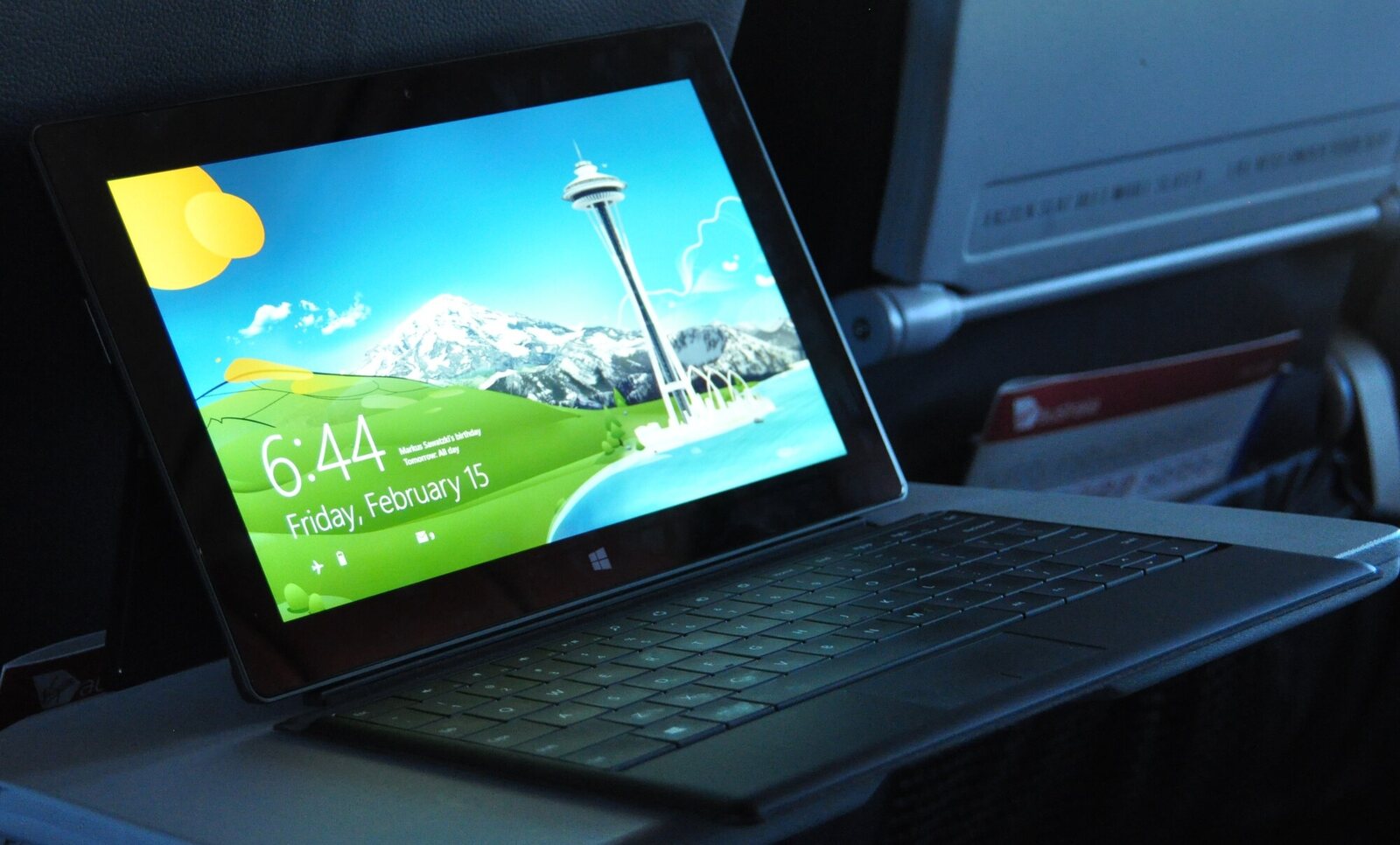
Windows RT was the edition of Windows 8 for ARM tablets, launched with Microsoft's first Surface on 26 October 2012 and sold on devices from Asus, Dell, Lenovo, Samsung and Nokia. It had the Windows desktop and Office but ran only Windows Store apps, which confused buyers and doomed sales; Microsoft wrote off $900 million of Surface RT in 2013 and partners abandoned it. The last device was discontinued in 2015 and support ended on 10 January 2023.
Timeline [edit]
- 2011
-
5 January 2011
Feature
Windows on ARM is shown at CES
The project that becomes Windows RT.
- 2012
-
26 October 2012
Launch
Windows RT launches with the Surface
$499, Office included, Store apps only.
- 2013
-
18 July 2013
Decline
The $900 million write-off
Unsold Surface RT stock; the price is cut by $150.
-
22 October 2013
Version
Surface 2 and Windows RT 8.1
The last significant RT device.
-
26 November 2013
Decline
"Not going to have three"
Julie Larson-Green signals the end of RT.
- 2015
-
January 2015
Decline
The Surface 2 is discontinued
No RT device remains in production.
-
16 September 2015
Version
Windows RT 8.1 Update 3
A Start menu instead of Windows 10.
- 2023
-
10 January 2023
Shutdown
End of support
Windows RT 8.1 leaves extended support.
How it looked [edit]
The site through time
Browse microsoft.com as it was, via the Internet Archive's Wayback Machine:
Ownership [edit]
Why it shut down [edit]
Official line: Windows RT looked like Windows 8 but ran only Store apps, and buyers who could not install their programs returned the tablets; Microsoft wrote off $900 million of unsold Surface RT stock in July 2013 and every other manufacturer had left by 2014. Microsoft stopped making the Surface 2 in January 2015, gave RT a token final update in September 2015 instead of Windows 10, and ended support for Windows RT 8.1 on 10 January 2023.
Our analysis: Windows RT was Microsoft's attempt to have an iPad-style locked-down tablet and the Windows brand at the same time, and it got the worst of both: a full Windows desktop on the screen with almost nothing that would run on it. Customers, and Microsoft's own store staff, could not tell it apart from Windows 8 until they tried to install something. The idea, Windows on ARM, was right and came back in 2017; the name did not.
History [edit]
Windows on ARM, sort of
Microsoft showed Windows running on ARM chips at CES 2011 and named the product Windows RT in April 2012: Windows 8 for tablets built on the same low-power processors as phones, with long battery life, thin hardware and a preloaded Office. The catch was that it could run only apps from the new Windows Store, written for the tile-based interface; the desktop was there, and Office ran on it, but no other Windows program ever would. Microsoft launched it on 26 October 2012 with the Surface, its first own-brand computer, at $499, alongside Windows 8 for ordinary PCs. Asus, Dell, Lenovo and Samsung shipped RT tablets too, and Nokia added the Lumia 2520 in 2013.
Nobody knew what it was
Reviewers found the hardware good and the proposition baffling, and customers agreed once they tried to install iTunes or a printer driver. Microsoft's own store staff struggled to explain the difference from Windows 8. Sales were poor from the start; Samsung and HTC pulled out within months, Dell and Lenovo followed, and in July 2013 Microsoft took a $900 million charge for unsold Surface RT inventory and cut its price by $150. In November 2013 Julie Larson-Green, who ran devices, said Microsoft would not keep three operating systems, and everyone understood which one would go.
The long tail
The Surface 2 of October 2013 was the last significant RT device, and Microsoft stopped making it in January 2015. When Windows 10 arrived that summer, RT devices did not get it; instead Windows RT 8.1 Update 3 in September 2015 added a Start menu and nothing else. Mainstream support ended in January 2018 and extended support on 10 January 2023, and the tablets became museum pieces that still turn on. Microsoft brought Windows back to ARM in 2017 with emulation for ordinary programs, which is what RT had needed in the first place.
The domain today
microsoft.com carries the Windows RT lifecycle page and little else about it.
Similar projects
 BlackBerry OS
The keyboard that ran the world
1999–2022
BlackBerry OS
The keyboard that ran the world
1999–2022
 Windows Phone
The tiles nobody wrote apps for
2010–2019
Windows Phone
The tiles nobody wrote apps for
2010–2019
 Symbian
Ran most of the world's smartphones, then burned with the platform
1998–2014
Symbian
Ran most of the world's smartphones, then burned with the platform
1998–2014
 Windows Mobile
A tiny Windows with a Start button, reset to zero by its own maker
2000–2012
Windows Mobile
A tiny Windows with a Start button, reset to zero by its own maker
2000–2012
 Palm OS
The organiser in your pocket that taught phones to be computers
1996–2009
Palm OS
The organiser in your pocket that taught phones to be computers
1996–2009
 BlackBerry 10
The reboot that arrived in 2013 and was switched off in 2022
2013–2022
BlackBerry 10
The reboot that arrived in 2013 and was switched off in 2022
2013–2022
Sources [edit]
- Microsoft Surface review The Verge 23 October 2012 [archived]
- Microsoft lost $900 million on Surface RT IGN 18 July 2013 [archived]
- Microsoft ready to kill Windows RT The Guardian 26 November 2013 [archived]
- Windows RT gets a Start menu of its own in Windows RT 8.1 Update 3 Ars Technica 16 September 2015 [archived]
- Windows RT lifecycle Microsoft 10 January 2023 [archived]
Last verified: 15 August 2026. Spotted an error? Suggest an edit (corrections with sources are reviewed and applied).