
Windows CE
Microsoft's small Windows for handhelds, set-top boxes and cash registers, alive from Comdex 1996 to a quiet end of support in 2023
Windows CE was Microsoft's compact operating system for devices that were not PCs, launched with the first Handheld PCs at Comdex on 18 November 1996 and used in Pocket PCs, Windows Mobile phones, the Zune, car systems and industrial and retail hardware. Renamed Windows Embedded CE and then Windows Embedded Compact, its last version, Compact 2013, reached the end of extended support on 10 October 2023, twenty-seven years after launch.
Timeline [edit]
- 1996
-
16 September 1996
other
Windows CE announced
Codename Pegasus; a modular kernel with the Win32 API.
-
18 November 1996
Launch
Handheld PCs launch at Comdex
Casio, Compaq, HP, NEC, Philips and others.
- 2000
-
15 June 2000
Version
Windows CE 3.0
The base for Pocket PC 2000.
- 2006
-
November 2006
Version
Windows Embedded CE 6.0
A rewritten kernel; later the base of Windows Phone 7.
- 2012
-
29 October 2012
Decline
Windows Phone 8 moves to the NT kernel
The consumer branch of CE ends.
- 2013
-
13 June 2013
Version
Windows Embedded Compact 2013
The last version.
- 2018
-
9 October 2018
Decline
Mainstream support ends
Extended support only.
- 2023
-
10 October 2023
Shutdown
Extended support ends
No successor; Windows 10 IoT recommended.
How it looked [edit]
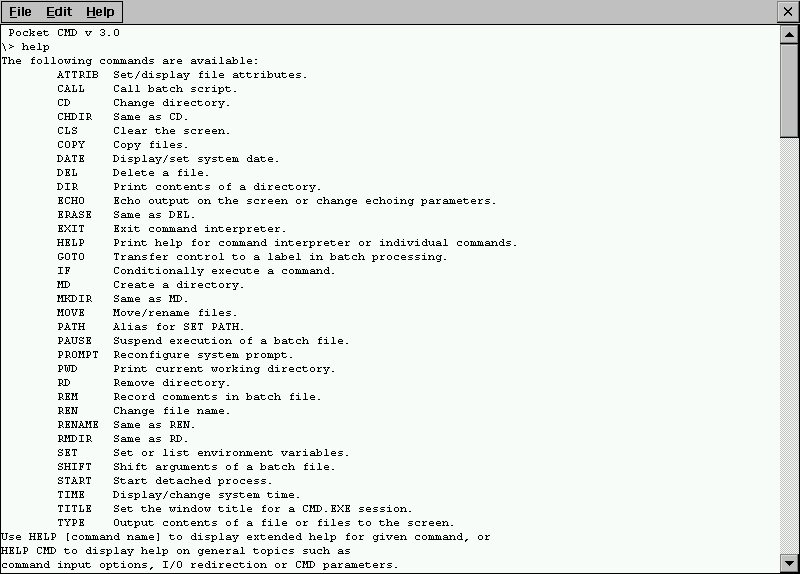
The site through time
Read the old front page here, in one piece, from our own capture: microsoft.com, 8 May 1999 →
Browse microsoft.com as it was, via the Internet Archive's Wayback Machine:
Ownership [edit]
Why it shut down [edit]
Official line: Windows Embedded Compact 2013, the last version, left mainstream support on 9 October 2018 and extended support on 10 October 2023, with no successor: Microsoft pointed embedded customers at Windows 10 IoT and offered a compatibility layer to run old CE applications on it. Licences were still sold for a while after that. The consumer versions built on it, Pocket PC and Windows Mobile, had died a decade earlier when Windows Phone 7 moved to a different kernel.
Our analysis: Windows CE was Microsoft's answer to a question the industry kept asking differently: how do you put Windows on something that is not a PC. It answered it well enough to run Handheld PCs, Pocket PCs, Windows Mobile phones, the Dreamcast's development kits, Zunes, car dashboards, barcode scanners and a generation of point-of-sale terminals. What killed it was that Microsoft itself moved on: Windows Phone to the NT kernel in 2010, embedded to Windows 10 IoT, and by 2018 there was no one inside the company whose job it was to keep CE alive.
History [edit]
Pegasus
Microsoft announced Windows CE, codenamed Pegasus, on 16 September 1996 and launched it at Comdex in Las Vegas on 18 November 1996 in the first Handheld PCs from Casio, Compaq, HP, NEC, Philips, Hitachi and LG: clamshell devices with a keyboard, a small monochrome touchscreen and pocket versions of Word, Excel and Internet Explorer that synced to a desktop PC. CE was not a cut-down Windows 95; it was a new, modular kernel that could be built for MIPS, SH, ARM and x86 and fitted into a few hundred kilobytes of ROM, with the Win32 API on top so Windows programmers could write for it.
It went everywhere. Version 2 (1997) added colour and the Palm-size PC; version 3.0 (June 2000) was the base for the Pocket PC 2000, which finally gave Microsoft a real Palm competitor, and for the Smartphone and Windows Mobile line that ran until 2010. CE also ran the Sega Dreamcast's Windows development environment and some of its games, the Zune, Ford SYNC and other in-car systems, thin clients, ATMs, barcode scanners, ruggedised handhelds and a great many cash registers. Versions came roughly every three years: CE .NET 4 (2002), 5.0 (2004), 6.0 (2006, with a rewritten kernel), Windows Embedded Compact 7 (2011) and Compact 2013, released in June 2013.
Left behind
The consumer branch died first: Windows Phone 7 in 2010 was built on CE 6 but Windows Phone 8 in 2012 moved to the NT kernel, and Windows Mobile 6.5 was the last CE phone OS. In the embedded market Microsoft steered customers to Windows 10 IoT Core and Enterprise, and Compact 2013 became the last version. Mainstream support ended on 9 October 2018 and extended support on 10 October 2023. Microsoft published a migration FAQ and a CE application container for Windows 10 IoT rather than a successor. Devices running it will be in service for years, as they always have been.
The domain today
microsoft.com keeps a Windows CE migration FAQ under its Windows IoT documentation.
Similar projects
 BlackBerry OS
The keyboard that ran the world
1999–2022
BlackBerry OS
The keyboard that ran the world
1999–2022
 Windows Phone
The tiles nobody wrote apps for
2010–2019
Windows Phone
The tiles nobody wrote apps for
2010–2019
 Windows RT
Windows for ARM tablets that could not run Windows programs
2012–2023
Windows RT
Windows for ARM tablets that could not run Windows programs
2012–2023
 Symbian
Ran most of the world's smartphones, then burned with the platform
1998–2014
Symbian
Ran most of the world's smartphones, then burned with the platform
1998–2014
 Windows Mobile
A tiny Windows with a Start button, reset to zero by its own maker
2000–2012
Windows Mobile
A tiny Windows with a Start button, reset to zero by its own maker
2000–2012
 Palm OS
The organiser in your pocket that taught phones to be computers
1996–2009
Palm OS
The organiser in your pocket that taught phones to be computers
1996–2009
Sources [edit]
- Microsoft announces Windows CE, newest member of Windows family Microsoft 16 September 1996
- Microsoft announces broad availability of Handheld PCs with Windows CE Microsoft 18 November 1996 [archived]
- Microsoft broadens availability of Windows CE to embedded systems manufacturers Microsoft 10 March 1997 [archived]
- Microsoft announces availability of Windows CE 3.0 Microsoft 15 June 2000 [archived]
- Microsoft announces general availability of Windows Embedded Compact 2013 SD Times 13 June 2013 [archived]
- Windows CE migration FAQ Microsoft Learn 10 October 2023
- Windows CE, Microsoft's stunted middle child, reaches end of support at 26 years Ars Technica 30 October 2023 [archived]
- Windows CE reaches end of life, if not end of sales The Register 30 October 2023 [archived]
Last verified: 16 August 2026. Spotted an error? Suggest an edit (corrections with sources are reviewed and applied).